

How to Work With a Web Design Agency to Grow Your Online Presence?
TL;DR
Working with a web design agency can help your business grow its online presence by improving your website design, search visibility, user experience, brand trust, content, local SEO, and conversion strategy.
To get the best results, do not approach an agency by simply saying, “I need a website.” Instead, be ready to explain your business goals, target audience, current online challenges, budget, timeline, content needs, SEO expectations, and long-term growth plans.
A good web design agency should help you with more than design. It should guide you through strategy, website structure, branding, SEO, content, mobile performance, analytics, launch, and ongoing improvement.
If your business is located in the Netherlands, you should also consider Dutch-language content, local SEO, Google Business Profile optimization, customer reviews, GDPR and cookie compliance, location-based service pages, and local trust signals.
How Can You Collaborate With a Web Design Agency to Boost Your Online Presence?
You can collaborate with a web design agency by first defining what you want your online presence to achieve. Your goal may be to get more leads, rank better on Google, attract local customers, improve your brand image, sell products online, or make your website easier to use.
Once your goals are clear, the agency can help you plan and build a website that supports those goals. This may include website design, SEO, local SEO, content strategy, mobile optimization, speed improvement, conversion-focused pages, analytics setup, and post-launch support.
The best collaboration happens when you treat the agency as a strategic partner, not just a designer. You bring business knowledge. The agency brings digital expertise. Together, you create an online presence that helps customers find, trust, and choose your business.
Who This Guide Is For?
This guide is for business owners, startup founders, local service providers, e-commerce store owners, consultants, professional firms, and marketing decision-makers who want to work with a web design agency but are not sure where to begin.
It is especially useful if you want more than a good-looking website. If your goal is to improve visibility, attract better traffic, generate leads, build trust, increase online sales, or compete more strongly in your market, this guide will help you understand what to prepare, what to ask, what to expect, and how to avoid common mistakes.
Why Your Online Presence Matters?
Your online presence is often the first impression people have of your business. Before contacting you, booking a service, visiting your location, or buying from you, many potential customers will search online first.
They may look at your website, compare you with competitors, read reviews, check your Google Business Profile, visit your social media pages, or search for your services on Google.
If your website looks outdated, loads slowly, is hard to use on mobile, or does not clearly explain what you offer, visitors may leave without contacting you. Most of the time, they will not tell you what went wrong. They will simply choose another business that looks more professional and trustworthy.
This is why a website should not be treated as only a digital brochure. It should work as a business tool. A strong website helps people understand what you do, why they should trust you, and what step they should take next.
A web design agency can help you build that foundation. But the real value comes when design is connected with SEO, content, user experience, local visibility, trust-building, and conversion strategy.

What Does “Online Presence” Actually Mean?
Online presence means every place where your business appears online. Your website is the center of it, but it is not the only part.
Your online presence may include your website, Google search results, Google Business Profile, online reviews, social media profiles, blog articles, service pages, product pages, directory listings, paid ads, email marketing, and your overall brand reputation.
For example, if a potential customer in the Netherlands searches for a service you offer, they may see your website, your reviews, your Google Business Profile, competitor websites, and social media profiles. All of these elements influence whether they trust your business enough to contact you.
A strong online presence should be clear, consistent, and trustworthy. Your website should explain what you do, who you help, where you operate, why you are credible, and how someone can contact you.
What a Web Design Agency Really Does?
A web design agency does more than create attractive pages. A professional agency helps plan, design, build, optimize, and improve your website so it supports your business goals.
A good agency may help with strategy, website design, development, user experience, SEO, local SEO, copywriting, branding, mobile responsiveness, website speed, analytics, security, e-commerce functionality, landing pages, and ongoing maintenance.
The best agencies do not begin with colors and layouts. They begin with business questions. They want to understand your customers, your services, your market, your competitors, your current website problems, and your goals.
They may ask questions such as:
- Who are your ideal customers?
- What services or products do you offer?
- Which locations do you serve?
- What makes your business different?
- What is not working on your current website?
- What action should visitors take?
- How will success be measured?
These questions matter because a successful website is not built randomly. A local service business, an e-commerce store, a restaurant, a consultant, and a professional firm all need different website strategies.
A good agency turns your business goals into a digital experience that is useful for your customers and valuable for your business.
The Best Collaboration Framework
The strongest results come when both you and the agency understand your roles at every stage of the project.
| Stage | What You Should Do | What the Agency Should Do |
|---|---|---|
| Strategy | Share your goals, audience, challenges, budget, timeline, and competitors | Audit your current presence and create a clear website strategy |
| Structure | Explain your services, locations, offers, and customer journey | Build a sitemap and plan SEO-friendly pages |
| Content | Provide business details, brand voice, service information, and proof | Guide or create content that supports SEO, trust, and conversions |
| Design | Share brand assets, examples, and feedback | Create layouts focused on users, clarity, and business goals |
| Development | Provide access, approvals, and required integrations | Build a fast, secure, mobile-friendly website |
| SEO | Share local knowledge, service priorities, and target areas | Optimise structure, metadata, content, speed, redirects, and local signals |
| Launch | Review final pages and test key actions | Handle technical checks, analytics, redirects, backups, and launch setup |
| Growth | Review reports and business results | Suggest improvements for SEO, content, conversions, and performance |
This framework keeps the project focused. It also helps prevent the most common problem in website projects: treating the website as a design task instead of a business growth project.
When Should You Work With a Web Design Agency?
You should consider working with a web design agency when your current website or online presence is not helping your business grow.
This may be the case if your website looks outdated, loads slowly, does not work well on mobile, does not generate leads, does not rank well on Google, or does not clearly explain your services.
You may also need an agency if your competitors look stronger online, your brand feels inconsistent, your website is difficult to update, or your business is entering a new market.
A simple way to decide is to ask:
Is my website helping people find, trust, and contact my business?
If the answer is no, a web design agency can help you understand what is missing and create a stronger online foundation.
Web Design Agency vs Freelancer vs DIY Website Builder
Before hiring a web design agency, it is useful to understand your options. Not every business needs the same level of support.
| Option | Best For | Limitations |
|---|---|---|
| DIY website builder | Simple websites, small budgets, and testing a new idea | Limited strategy, SEO, customisation, scalability, and expert guidance |
| Freelancer | Smaller projects or specific tasks such as design, development, or copywriting | One person may not cover strategy, SEO, content, design, development, and support |
| Web design agency | Businesses that need a complete solution for design, SEO, development, content, and growth | Usually costs more and requires additional planning and collaboration |
A DIY builder may be enough if you only need a basic online presence. A freelancer may be suitable if you need help with one specific task. A web design agency is usually the better choice when your website is important for long-term business growth.
If your goal is to improve search visibility, build trust, attract customers, and generate leads or sales, an agency can provide a more complete solution.
Start With Clear Business Goals
One of the biggest mistakes businesses make is contacting an agency without knowing what they want the website to achieve.
Saying “I need a better website” is too general. A better website could mean more traffic, more leads, more phone calls, more bookings, better branding, faster loading speed, higher search rankings, or more online sales.
Before speaking with an agency, define your main goal. For example, you may want to attract more local customers, improve your visibility on Google, generate more quote requests, make your brand look more professional, or increase e-commerce sales.
A weak goal sounds like this:
“I want a modern website.”
A stronger goal sounds like this:
“I want a professional website that helps my business attract more local customers, rank better on Google, and generate more qualified leads.”
The second goal gives the agency a clear direction. It helps them make smarter decisions about design, content, SEO, calls to action, website structure, and tracking.
A website should not only look good. It should support measurable business results.

Understand Your Target Audience
Your website should be designed for your customers, not only for your personal preference.
Before the project begins, think carefully about your ideal customer. Where are they located? What problem are they trying to solve? What questions do they ask before buying? What makes them trust a business? What might stop them from contacting you?
If your business is located in the Netherlands, your audience may expect Dutch-language content, clear contact details, transparent service information, customer reviews, local trust signals, and GDPR-friendly website practices.
For example, if you run a local service business in Amsterdam, Rotterdam, Utrecht, The Hague, Eindhoven, or another Dutch city, your website should clearly show which areas you serve. It should also explain why local customers can trust you, using reviews, case studies, certifications, portfolio examples, or clear service explanations.
The better you understand your audience, the better your agency can design a website that speaks to them.
Review Your Current Online Presence Before Starting
Before building or redesigning a website, review what you already have. This gives the agency a clearer picture of what needs improvement.
Look at your current website and ask whether it clearly explains your services, loads quickly, works well on mobile, and makes it easy for people to contact you. Check whether your service pages are detailed enough, whether your calls to action are clear, and whether your website builds trust.
Also, review your Google Business Profile, online reviews, social media pages, search rankings, blog content, and competitor websites. You do not need to perform a full technical audit yourself. A professional agency can do that. But you should understand the main problems you are facing.
| Area to Review | What to Look For |
|---|---|
| Website design | Does the website look professional and current? |
| Mobile experience | Is it easy to browse, read, and contact you on a phone? |
| SEO visibility | Can people find your services on Google? |
| Content quality | Are your services explained clearly and helpfully? |
| Trust signals | Do you show reviews, testimonials, case studies, or other proof? |
| Conversion path | Is it easy to request a quote, call, book, or buy? |
| Local presence | Is your Google Business Profile complete and accurate? |
This early review helps the agency build a more focused strategy instead of guessing.
Research Your Competitors
Competitor research helps you understand what your website needs to do better.
You do not need to copy your competitors, but you should study how they present themselves online. Look at their homepage, service pages, calls to action, blog content, reviews, case studies, pricing information, and local SEO presence.
Ask yourself: do they explain their services better than you? Do they look more trustworthy? Are their websites easier to use? Do they rank for important keywords? Do they show stronger testimonials or portfolio examples?
A good agency can use this information to find opportunities. Maybe your competitors have weak content. Maybe they do not explain their process. Maybe they lack local landing pages. Maybe they do not show enough proof.
The goal is not to become a copy of your competitors. The goal is to position your business more clearly and more convincingly.
Decide What Services You Need From the Agency
Not every agency offers the same services, and not every business needs the same level of support.
Some businesses only need a website redesign. Others need SEO, content writing, branding, local SEO, e-commerce functionality, landing pages, hosting support, website maintenance, analytics setup, or conversion optimization.
Before hiring an agency, separate your must-have requirements from your nice-to-have features.
| Requirement Type | Examples |
|---|---|
| Must-have | Mobile-friendly website, service pages, contact form, SEO setup, analytics, and fast loading speed |
| Nice-to-have | Live chat, booking system, multilingual pages, CRM integration, advanced animations, and custom tools |
| Long-term growth | Blog strategy, local SEO, landing pages, conversion optimisation, and monthly reporting |
This helps the agency prepare a realistic proposal and prevents confusion later.
Choose the Right Website Platform
The platform your website is built on matters. It affects how easy your website is to update, how flexible the design can be, how well it supports SEO, how secure it is, and how much maintenance it needs.
Common website platforms include WordPress, Shopify, WooCommerce, Webflow, Wix, Squarespace, Magento, and custom-coded solutions.
WordPress is often used for business websites, blogs, and SEO-focused websites. Shopify is commonly used for e-commerce. WooCommerce is useful for e-commerce within WordPress. Webflow is strong for flexible visual design. Wix and Squarespace can work for simpler websites. Custom-coded websites may be suitable for complex requirements.
Do not choose a platform only because it is popular or because an agency prefers it. Ask why the platform is right for your business.
| Platform Question | Why It Matters |
|---|---|
| Will I be able to update the website myself? | You may need to edit text, images, blog posts, or pages later |
| Is it good for SEO? | Search visibility depends partly on technical flexibility |
| Is it scalable? | Your website should support future growth |
| What are the ongoing costs? | Hosting, plugins, apps, and maintenance may add costs |
| Can I move the website later? | You should avoid being locked into one provider |
| Will I own the website? | Ownership should be clear from the beginning |
The right platform should support your current needs and future growth.
Discuss SEO From the Beginning
If you want to improve your online presence, SEO must be part of the project from the beginning. It should not be added after the website is already designed.
SEO affects your website structure, page URLs, service pages, headings, internal links, image optimization, website speed, mobile experience, metadata, technical setup, and content strategy.
A good agency should think about keyword research, SEO-friendly page structure, on-page SEO, technical SEO, local SEO, redirects, schema markup, Google Search Console, and content planning.
For example, if you offer multiple services, each major service may need its own page. If you serve different cities or regions, you may need location-specific content. If customers often ask the same questions, you may need FAQ sections or blog articles that answer those questions clearly.
A beautiful website that no one can find will not help your business grow. SEO helps your website become visible to people who are already searching for what you offer.
Use GEO: Generative Engine Optimization
GEO stands for Generative Engine Optimization. It means creating content that is easy for AI search engines, answer engines, and users to understand.
Traditional SEO focuses on ranking in search results. GEO focuses on making your content clear, structured, trustworthy, and useful enough to be included in AI-generated answers.
For a business website, GEO-friendly content should answer real customer questions directly. It should explain what your service includes, who it is for, what problems it solves, how the process works, what results people can expect, and why your business is trustworthy.
For example, instead of writing a vague service page that says, “We offer professional web design,” a stronger page would explain:
- What your web design service includes
- Who the service is best for
- What problems does it solve
- How your process works
- What makes your agency or business different
- What results can customers expect
- How can someone get started
Clear, structured content helps both people and AI systems understand your business better.
For GEO, your website should include direct answers, helpful headings, FAQs, practical examples, comparison sections, original insights, and trust signals.
Build E-E-A-T Into Your Website
E-E-A-T stands for Experience, Expertise, Authoritativeness, and Trustworthiness. These are important quality signals for helpful content and credible websites.
For your business website, E-E-A-T means showing visitors that your business is real, experienced, reliable, and qualified to help them.
You can build E-E-A-T by including real business information, team details, case studies, portfolio examples, testimonials, customer reviews, certifications, awards, original photos, transparent contact information, privacy policy, terms and conditions, and helpful expert content.
| E-E-A-T Element | How to Show It on Your Website |
|---|---|
| Experience | Show past projects, case studies, client examples, or before-and-after results |
| Expertise | Publish helpful service pages, guides, FAQs, and expert insights |
| Authoritativeness | Display certifications, awards, partnerships, media mentions, or industry proof |
| Trustworthiness | Use reviews, clear contact details, legal pages, secure browsing, and transparent policies |
Visitors need proof before they trust you. The more clearly your website demonstrates experience and credibility, the more confident potential customers will feel.
Focus on Local SEO If You Serve a Specific Area
If your business serves a specific country, city, or region, local SEO is essential.
For a business in the Netherlands, local SEO may include Dutch keyword research, Google Business Profile optimization, local reviews, Dutch-language service pages, city-based landing pages, local directory listings, consistent contact details, embedded maps, and content that answers local customer questions.
For example, a business targeting customers in Amsterdam may need a different local SEO strategy than a business targeting Rotterdam, Utrecht, Eindhoven, or the entire Netherlands.
Location-based content can be useful, but it must be genuinely helpful. Avoid creating thin or duplicate city pages just to target keywords. Each location page should include useful local information, relevant services, customer proof, and clear contact options.
A strong agency should help you build local visibility naturally and strategically.
Plan Your Website Structure Carefully
Website structure affects both user experience and SEO. A clear structure helps visitors find information quickly and helps search engines understand your website.
A typical business website may include a homepage, about page, services page, individual service pages, portfolio, case studies, testimonials, blog, FAQ page, contact page, privacy policy, and terms and conditions.
If you run an e-commerce business, you may also need product category pages, product pages, a cart, a checkout, a shipping policy, a return policy, and payment information.
If you serve local areas, you may need location pages or service area pages.
One common mistake is putting all services on one short page. This may look simple, but it can limit SEO and make it harder for customers to find detailed information. If a service is important to your business, it usually deserves its own dedicated page.
A good agency should create a sitemap before design begins. This gives the project a clear foundation.

Prepare Your Content Early
Content is one of the biggest reasons website projects get delayed.
Before the project starts, think about what content your website needs. This may include homepage text, service descriptions, product details, about page content, FAQs, testimonials, case studies, blog topics, contact information, calls to action, and legal pages.
You should also decide who will write the content. Will you write it yourself? Will the agency write it? Will a copywriter be involved? Will your existing content be rewritten?
Good website content should be clear, helpful, and persuasive. It should explain what you offer, who you help, why customers should trust you, and what action they should take next.
For SEO and GEO, your content should also answer real customer questions.
Examples of useful questions to answer include:
- What does the service include?
- How does the process work?
- How long does it take?
- Who is it best for?
- What problems does it solve?
- What should the customer do next?
Design can make your content look better, but it cannot replace a clear message. Strong design and strong content must work together.
Prepare Your Brand Assets
Your brand assets help the agency create a consistent and professional website.
Before starting, gather your logo files, brand colors, fonts, brand guidelines, photos, videos, product images, brochures, social media links, tone of voice, mission statement, company values, and unique selling points.
If you do not have strong brand assets, tell the agency early. Some agencies can help with branding, logo design, visual identity, photography direction, or copywriting.
Your brand is not just your logo. It is how your business looks, sounds, and feels online. A strong brand helps customers remember you and trust you.
If your brand identity is unclear, your website may also feel unclear. That is why branding and web design should work together.
Focus on User Experience
User experience means how easy and comfortable your website is to use.
A good website should have clear navigation, fast-loading pages, readable content, mobile-friendly layouts, simple forms, visible buttons, helpful information, and a logical journey from first impression to final action.
When someone lands on your website, they should quickly understand what you offer, who you help, why they should trust you, and what they should do next.
If visitors have to search too hard for information, they may leave. If your contact form is too complicated, they may not complete it. If your mobile menu is confusing, they may give up.
A web design agency should design your website around your users’ needs, not just around visual style.

Design for Conversions, Not Just Appearance
A visually attractive website is important, but design alone is not enough. Your website should encourage visitors to take action.
A conversion may be a phone call, contact form submission, quote request, booking, purchase, newsletter signup, or consultation request.
To improve conversions, your website needs clear calls to action, strong service pages, trust signals, testimonials, case studies, simple forms, visible contact options, and persuasive content.
For example, a weak call to action says:
“Contact us.”
A stronger call to action says:
“Request a free consultation.”
Or:
“Get a custom quote for your project.”
Every important page should have a clear purpose. If the goal of a page is to generate leads, the design and content should guide the visitor toward that action.
Prioritize Mobile Design
Many visitors will view your website on a mobile device. If your website does not work well on mobile, you may lose potential customers.
Mobile design should include responsive layouts, readable text, tap-friendly buttons, fast loading speed, simple navigation, easy forms, and click-to-call options.
Mobile design should not be treated as something the agency checks at the end. It should be part of the strategy from the beginning.
A website that looks good on desktop but performs poorly on mobile will not deliver the best results.
Improve Website Speed and Performance
Website speed affects user experience, SEO, and conversions. A slow website can make visitors leave before they even understand what you offer.
A web design agency should optimize image sizes, hosting quality, code, caching, plugins, scripts, fonts, mobile performance, and Core Web Vitals.
Ask your agency how they plan to improve website speed. Ask whether they will optimize images, avoid unnecessary plugins, recommend good hosting, and test the website before launch.
Fast websites feel more professional. They also make it easier for users to browse, read, and take action.
Do Not Ignore Website Security
Website security protects your business and your visitors.
A professional agency should consider SSL certificates, secure hosting, regular backups, software updates, plugin updates, malware protection, spam protection, strong passwords, admin access control, and recovery planning.
Security is especially important if your website collects customer information, uses forms, processes payments, or stores user data.
A secure website builds trust and reduces risk. It should be part of the project, not an afterthought.

Clarify Website Ownership Before You Start
Website ownership is one of the most important topics to discuss before signing an agreement.
You should know who owns the domain, hosting account, website files, design, content, images, and login credentials. You should also ask whether you will receive admin access and whether you can move the website later if needed.
This matters because some businesses later discover they do not fully control their own website or domain. That can create problems if they want to change agencies, update the website, or move hosting.
Before the project begins, make sure ownership and access are clearly written in the proposal or contract.
Your business should never be unclear about who controls its digital assets.
Understand Pricing and Budget
Website pricing can vary widely depending on the size of the project, design complexity, number of pages, content requirements, SEO work, platform, e-commerce features, integrations, timeline, and ongoing support.
A simple website will cost less than a custom e-commerce website or a large SEO-focused business website. Copywriting, branding, photography, booking systems, CRM integrations, multilingual content, and custom development can also affect the price.
Before choosing an agency, ask what is included and what is not included. Find out whether SEO, content writing, hosting, maintenance, revisions, analytics setup, and post-launch support are part of the price.
Do not choose an agency only because it is the cheapest. A cheap website can become expensive later if it performs poorly, needs to be rebuilt, or fails to generate leads.
The better question is not “Who is cheapest?” The better question is “Which agency can create the most long-term value for my business?”
Review the Proposal Carefully
A professional agency should provide a clear proposal before the project begins.
The proposal should explain the project goals, scope of work, deliverables, timeline, pricing, payment terms, revision rounds, platform recommendation, SEO details, content responsibilities, maintenance options, ownership terms, and launch process.
A vague proposal can lead to confusion later. If anything is unclear, ask for clarification before agreeing.
For example, if the proposal says “SEO included,” ask what that means. Does it include keyword research, metadata, technical SEO, redirects, local SEO, content optimization, or only basic setup?
Clear details protect both you and the agency.
Read the Contract Before Signing
A serious website project should always have written terms.
The contract should explain the payment schedule, project scope, timeline, cancellation terms, revision policy, ownership rights, confidentiality, extra work charges, support period, hosting responsibility, maintenance terms, and what happens if feedback is delayed.
A contract is not a sign of mistrust. It is a sign of professionalism.
If something is not written, do not assume it is included. Ask questions before signing.
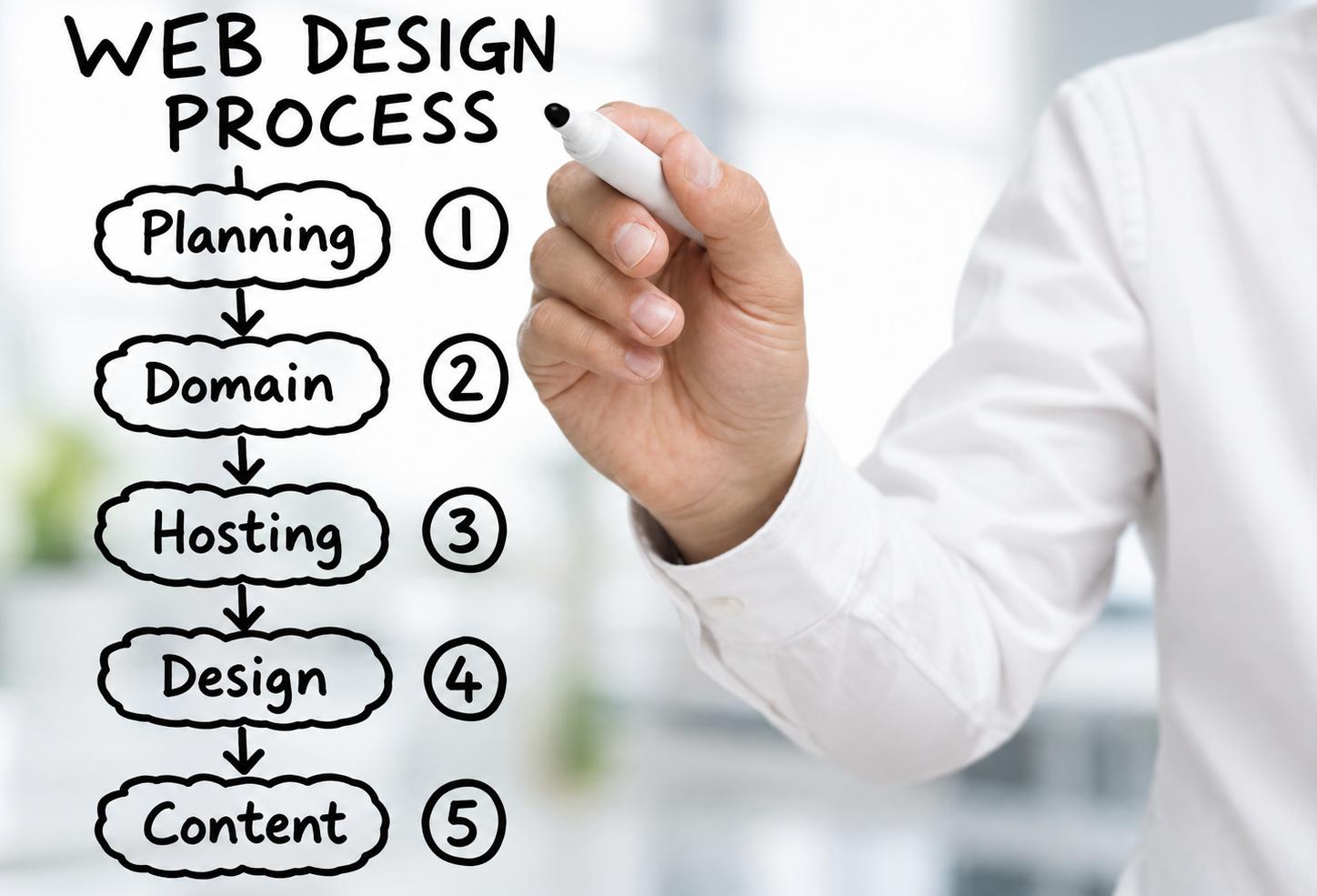
Understand the Web Design Process
A good agency should have a clear process. This helps the project stay organized and reduces delays.
A typical process may include discovery, business analysis, website audit, competitor research, strategy planning, sitemap creation, content planning, wireframes, design mockups, feedback, development, SEO setup, testing, launch preparation, website launch, and post-launch support.
The process may vary depending on the agency and project size, but there should always be a clear plan.
If an agency wants to start designing immediately without understanding your business, audience, goals, or content, that may be a warning sign.
Strong websites are planned before they are designed.
Know What You Need to Provide
A successful website project requires input from both sides.
You may need to provide business goals, target audience details, service information, product information, brand assets, examples of websites you like, competitor examples, photos, testimonials, case studies, login details, domain access, hosting access, content direction, feedback, and approvals.
The agency brings technical and creative expertise, but you bring the business knowledge. They need your input to create a website that accurately represents your company.
The better your input, the better the final result.
Set Clear Communication Expectations
Communication can make or break a website project.
Before the project begins, clarify who your main contact person will be, how often updates will be shared, which communication channel will be used, how feedback should be provided, who approves decisions, and what happens if deadlines or feedback are delayed.
Good communication prevents confusion and keeps the project moving.
A professional agency should guide you through the process, but you also need to respond on time and give clear feedback.
Learn How to Give Useful Feedback
Feedback is an important part of the website process, but unclear feedback can slow everything down.
Comments like “make it pop” or “I do not like it” are difficult for an agency to act on. Better feedback is specific and connected to your business goals.
For example, instead of saying, “This section feels wrong,” you could say, “The services section does not clearly explain our main offer. Can we make the headline more direct and add a stronger call to action?”
Instead of saying, “The page is too plain,” you could say, “Can we add testimonials or case studies here to build more trust before the contact form?”
Useful feedback helps the agency improve the website faster and more accurately.
Ask the Right Questions Before Hiring an Agency
Before choosing a web design agency, ask questions that reveal how they work.
| Question to Ask | Why It Matters |
|---|---|
| Have you worked with businesses like mine before? | Shows whether they understand your industry or type of project |
| Can I see relevant examples or case studies? | Helps you assess their quality and experience |
| How do you approach SEO? | Shows whether they understand online visibility, not just design |
| Who writes the website content? | Prevents delays and unclear responsibilities |
| What platform do you recommend and why? | Helps you understand scalability, maintenance, and ownership |
| Will I be able to update the website myself? | Gives you control after launch |
| What is included in the price? | Prevents unexpected or hidden costs |
| Who owns the website after launch? | Protects your digital assets |
| Do you provide maintenance? | Keeps your website secure and updated |
| How do you measure success? | Connects the project to measurable business results |
The answers will help you understand whether the agency is professional, transparent, and suitable for your business.
Signs of a Good Web Design Agency
A good agency usually has a strong portfolio, clear process, transparent pricing, good communication, SEO knowledge, UX understanding, technical expertise, case studies, positive reviews, realistic promises, and post-launch support.
More importantly, a good agency talks about business results, not only design style.
They should care about how the website will attract visitors, build trust, answer questions, and generate leads or sales.
| Good Sign | What It Means |
|---|---|
| Clear discovery process | They want to understand your business before designing |
| Strong portfolio | They can show real examples of previous work |
| SEO knowledge | They understand visibility and search performance |
| Transparent proposal | You know what is included and what is not |
| Realistic promises | They are honest about timelines and expected results |
| Post-launch support | They can help after the website goes live |
If an agency only talks about colors, animations, and layouts, but not strategy, SEO, content, performance, or conversions, they may not be the right partner for improving your online presence.
Red Flags to Watch Out For
Be careful if an agency has no portfolio, no clear pricing, no written proposal, no contract, poor communication, unrealistic SEO guarantees, no discovery process, no discussion about goals, no mention of mobile design, no SEO knowledge, no maintenance plan, or unclear ownership terms.
Also, be cautious if an agency pressures you to sign quickly or promises instant results.
| Red Flag | Why It Is a Problem |
|---|---|
| Guaranteed number-one rankings | SEO results cannot be honestly guaranteed |
| No contract | Responsibilities and ownership may become unclear |
| Vague pricing | You may face unexpected costs later |
| No discovery phase | The agency may design without understanding your business |
| No SEO discussion | Your website may look good but fail to attract relevant traffic |
| No ownership clarity | You may not fully control your website or domain |
| No maintenance plan | Your website may become outdated or insecure |
Choose an agency that gives realistic guidance, not exaggerated promises.
Have Realistic Expectations
A new website can improve your online presence, but not every result happens instantly.
Some improvements can happen quickly. A better design can increase trust. Clearer calls to action can improve inquiries. A better mobile experience can reduce frustration. Faster loading speed can improve user experience.
Other results take more time. SEO, content marketing, local visibility, authority building, and review growth usually require ongoing effort.
Think of your website launch as the beginning of your digital growth, not the end.
The agency can build the foundation, but long-term results often come from consistent improvement.
Plan the Website Launch Properly
A website launch should be carefully managed.
Before launch, the agency should test the website on desktop and mobile, check forms, optimize speed, add SEO titles and descriptions, connect analytics, set up Google Search Console, check redirects if it is a redesign, activate security, prepare backups, test links, and confirm contact details.
If you are replacing an old website, redirects are especially important. Without proper redirects, old URLs may break, and you may lose traffic.
A smooth launch protects your online presence and gives your new website the best start.
Include Legal and Compliance Pages
A professional website should include the right legal and compliance pages.
Depending on your business and location, this may include a privacy policy, cookie policy, terms and conditions, disclaimer, refund policy, shipping policy, accessibility statement, and GDPR-related cookie consent.
If your business is in the Netherlands or serves users in the European Union, GDPR and cookie compliance should be taken seriously.
A web design agency can usually help with implementation, such as cookie banners and privacy page placement. However, for legal wording, it is better to consult a legal professional.
Legal pages help build trust and reduce risk.
Set Up Analytics and Tracking
You cannot improve what you do not measure.
Your agency should help set up tools such as Google Analytics, Google Search Console, Google Tag Manager, form tracking, call tracking, e-commerce tracking, or conversion tracking.
You should track the metrics that matter to your business.
| Business Goal | Metrics to Track |
|---|---|
| More visibility | Organic traffic, keyword rankings, and search impressions |
| More local customers | Google Business Profile actions, local rankings, and reviews |
| More leads | Form submissions, phone calls, and quote requests |
| More sales | Conversion rate, revenue, and cart abandonment rate |
| Better user experience | Bounce rate, time on page, and mobile performance |
| Better performance | Page speed, Core Web Vitals, and loading time |
Analytics helps you understand what is working and what needs improvement.
Without tracking, you are guessing.
Plan Post-Launch Support
Your website needs support after it goes live.
Post-launch support may include bug fixes, security updates, plugin updates, backups, speed checks, content updates, SEO monitoring, landing page creation, technical support, and monthly reporting.
Ask the agency what happens after launch. Is support included? Do they offer maintenance? How are updates handled? What happens if something breaks? Can they help with future changes?
A website should not be abandoned after launch. Ongoing support helps keep it secure, updated, and effective.
Build a Long-Term Digital Growth Plan
To truly boost your online presence, you need more than a website launch.
After the website is live, you may need ongoing SEO, blog content, local SEO, social media marketing, email marketing, paid ads, landing pages, case studies, video content, review collection, reputation management, conversion optimization, and new service pages.
For example, if your goal is to rank better in the Netherlands, you may need regular Dutch-language content, local service pages, optimized Google Business Profile updates, and a review strategy.
A strong website gives you the foundation. Ongoing digital marketing helps you grow from that foundation.
How to Measure Success
Success should not be measured only by how good the website looks. A beautiful website is valuable, but business results matter more.
Depending on your goals, you may measure success through:
- Website traffic
- Organic search traffic
- Keyword rankings
- Local search visibility
- Google Business Profile actions
- Contact form submissions
- Phone calls
- Quote requests
- Bookings
- Online sales
- Conversion rate
- Page speed
- Mobile performance
- Return on investment
Before the project begins, agree on what success means.
For one business, success may mean more local calls. For another, it may mean more online sales. For another, it may mean better credibility and stronger brand presentation.
Clear success metrics help both you and the agency stay focused.
Common Mistakes to Avoid
Many businesses make the same mistakes when working with a web design agency.
The most common mistakes include hiring without clear goals, choosing only based on price, ignoring SEO, ignoring mobile design, not preparing content, giving unclear feedback, not asking about ownership, not reading the contract, not planning maintenance, expecting instant SEO results, and treating the website as a one-time project.
Another major mistake is focusing only on design. Design matters, but a successful website also needs strategy, content, SEO, performance, trust signals, and conversion planning.
Avoiding these mistakes can save time, money, and frustration.
Final Checklist Before Collaborating With a Web Design Agency
Before contacting an agency, make sure you understand your business goals, target audience, budget range, timeline, required pages, services or products, brand materials, competitor examples, SEO expectations, content needs, local SEO goals, and long-term marketing plans.
Before signing, confirm the scope of work, deliverables, timeline, price, payment terms, revision rounds, platform, SEO work, content responsibility, ownership, post-launch support, tracking setup, and contract terms.
This preparation helps you enter the collaboration with confidence and reduces the risk of misunderstandings.
FAQs About Working With a Web Design Agency
A web design agency can improve your online presence by creating a professional website, improving SEO, strengthening your brand, making your website mobile-friendly, improving user experience, creating better content, setting up analytics, and helping visitors take action.
Conclusion
Collaborating with a web design agency can be one of the most effective ways to grow your online presence, but only if you approach it strategically.
Do not think of the project as simply “getting a new website.” Think of it as building a digital foundation for visibility, trust, leads, sales, and long-term growth.
Before hiring an agency, define your goals, understand your audience, review your current online presence, prepare your content, discuss SEO, clarify ownership, ask the right questions, and plan for what happens after launch.
A good web design agency is not just a service provider. It is a strategic partner that helps your business become easier to find, easier to trust, and easier to choose.
The best collaboration happens when your business knowledge and the agency’s digital expertise work together toward the same goal: building an online presence that supports real business growth.

Search
Categories
Recent Posts
- 20 Dec, 2024 Building Brand Loyalty: How Custom Mobile Apps Drive Business Success
- 17 Jan, 2025 Designing An Attractive and Truly User-Friendly Website!
- 23 Dec, 2024 Driving Sales Through Online Channels: Transforming Your Business with a Webshop
- 09 Sep, 2024 Enhancing Customer Engagement: The Business Benefits of Mobile App Development
- 23 Dec, 2024 Expanding Market Reach: The Strategic Value of an E-commerce Webshop
- 10 Mar, 2026 Google Review Card: NFC vs QR – What Works Better?
- 01 May, 2026 Google Tools for Websites: A Complete, Detailed Guide for Website Owners, Developers, and Marketers
- 09 Sep, 2024 Harnessing Professional Web Design: Elevating Your Business’s Online Presence
- 13 Jun, 2026 Headless CMS vs Traditional CMS: Which Should Your Business Choose?
- 09 Sep, 2024 How an Online Delivery System Empowers Business Operations
- 07 Aug, 2026 How can a Dutch company get cited in ChatGPT, Gemini, Perplexity, and Copilot answers?
- 18 Sep, 2026 How can I choose a reliable web development company in the Netherlands?
- 07 Sep, 2026 How do I improve local visibility in ChatGPT and Microsoft Copilot, not just Google Maps?
- 20 Jan, 2025 How To Build A Custom Website For Your Business?
- 31 Aug, 2026 How to Choose a Digital Marketing Agency in the Netherlands: Services, Costs and a Practical Checklist
- 20 Jan, 2025 How To Create A Professional Website For Building Online Presence?
- 02 Aug, 2024 How to Plan a Perfect Digital Market
- 25 Jun, 2026 How to Work With a Web Design Agency to Grow Your Online Presence?
- 23 Dec, 2024 Investing in Website Development: Enhancing Customer Engagement and Conversion Rates
- 23 Dec, 2024 Meeting Customer Expectations: The Competitive Edge of an Online Delivery System
- 23 Dec, 2024 Optimizing Logistics: Enhancing Business Agility with an Online Delivery System
- 17 Jan, 2025 Optimizing Your Website with a Website Builder in Amsterdam
- 20 Jul, 2026 Progressive Web Apps (PWA) vs Native Apps
- 22 Apr, 2026 SEO vs GEO: The Future of Search in the Age of AI
- 03 Apr, 2026 The 10 Biggest Mistakes When Building a Website – and How to Avoid Them
- 27 Dec, 2025 The Cost of Getting a Website Made: What You Can Expect in the Netherlands?
- 09 Sep, 2024 The Essential Role of Online Marketing for Businesses
- 20 Dec, 2024 The Power of Digital Storytelling: Leveraging Online Marketing to Connect with Customers
- 23 Dec, 2024 The Strategic Advantage of a Well-Designed Website for Business Growth
- 23 Dec, 2024 Unlocking Market Potential: How Strategic Digital Marketing Propels Business Success
- 09 Sep, 2024 Unlocking Revenue Streams: Establishing an Online Webshop for Your Business
- 06 Jul, 2026 Web Performance Optimisation: Core Web Vitals
- 03 Aug, 2026 What is an E-commerce Website and How Does It Work?
- 27 Mar, 2026 What is sitemap.xml and Why Is It Important for SEO?
- 15 Apr, 2026 What Is the Difference Between Shopify and WordPress?
- 15 Jan, 2026 What Makes a Website Design User-Friendly?
- 30 Jul, 2026 What’s Allowed/Not Allowed With Google Reviews?
- 21 Mar, 2026 What’s Involved in Having a Website Created: A Step – by – Step Guide
- 27 Feb, 2026 What’s Involved in Having a Website Created: A Step-by-Step Guide
- 21 Jan, 2025 Why Consider WordPress for Website Builder?
- 21 Jan, 2025 Why Do Businesses Hire WordPress Website Builder Companies?
- 20 Jan, 2025 Why Does Your Business Need a Local Web Design Agency?
- 12 Aug, 2026 Why Is My WordPress Website Slow and How Can I Fix It?
- 11 Dec, 2025 Why You Should Have a Professional Website Built in 2026: What’s Changing?