

SEO vs GEO: The Future of Search in the Age of AI
TL;DR: SEO vs GEO
SEO and GEO are not competing strategies. They work together.
SEO helps your pages rank in traditional search engines. GEO helps your brand, content, and expertise get selected, cited, summarized, or recommended inside AI-generated answers.
This matters because search behavior is changing. Users are no longer only typing short keywords into Google and clicking through a list of results. They are asking detailed questions inside AI tools like ChatGPT, Gemini, Perplexity, Claude, Copilot, and AI Overviews, expecting one clear, synthesized answer.
So the real shift is this:
SEO is about ranking in search results. GEO is about being included in the answer.
To stay visible, brands need both. Strong SEO makes content discoverable, crawlable, and authoritative. GEO-aware content makes that same information easier for AI systems to understand, trust, extract, cite, and recommend.
Key Takeaways
SEO is still essential because traditional search continues to drive discovery, traffic, and demand.
GEO adds a new visibility layer focused on AI-generated answers, brand mentions, citations, and recommendations.
The main difference is the outcome: SEO aims for rankings and clicks, while GEO aims for answer inclusion and reference presence.
AI systems prefer content that is clear, structured, specific, credible, and easy to summarize.
EEAT matters more than ever because trust, expertise, and authority influence whether content is considered useful enough for AI systems to reference.
The best strategy is not SEO vs GEO. It is SEO plus GEO.
SEO vs GEO: Quick Comparison
| Factor | SEO | GEO |
|---|---|---|
| Full form | Search Engine Optimization | Generative Engine Optimization |
| Main goal | Help pages rank in search engine results | Help brands, ideas, products and expertise appear in AI-generated answers |
| Visibility model | Ranking in a list of search results | Inclusion, citation, mention or recommendation within a synthesized answer |
| Primary user behaviour | Users search, scan results and click links | Users ask conversational questions and expect direct answers |
| Main optimization focus | Keywords, search intent, technical health, backlinks, content quality and user experience | Entities, context, credibility, structured information, citations, answerability and trust |
| Success metrics | Rankings, organic traffic, click-through rate, sessions and conversions | AI mentions, citation frequency, recommendation presence, share of voice in AI answers and prompt visibility |
| Content unit | Pages, keywords and topic clusters | Entities, claims, frameworks, expertise and knowledge presence |
| How discovery happens | Search engines crawl, index, rank and display pages | AI systems retrieve, interpret, synthesize and generate answers from multiple sources |
| What content needs to do | Match search intent and earn clicks | Be easy to understand, extract, summarize, trust, quote and recommend |
| Role of E-E-A-T | Important for content quality, trust and ranking support | Foundational because AI systems are more likely to use credible, specific and well-supported information |
| Best for | Capturing organic search demand and driving website traffic | Building answer presence, brand authority and AI-era discoverability |
| Bottom line | SEO helps you get found in search results | GEO helps you get included in the answer |
SEO has set out the rules of engagement for brand name visibility on the internet for over 20 years. When people ran Google searches, sites optimized their pages to appear for those queries. And the rules have become so familiar, such as target keywords, increased technical health, build up authority, and backlinks to message search engines, that you are better at serving intent than everyone else.
That model still matters. Yet search is no longer a list of blue links.
More importantly, in the present day, users are more inclined to ask questions inside AI-powered interfaces. ChatGPT, Gemini, Perplexity, Copilot, Claude, and AI Overviews in Search Engines. Where they once had to sift through ten results, they want one answer that has been synthesized. They want the machine to interpret, summarize, recommend, and decide instead of comparing pages manually.
That shift is creating a new discipline: GEO, or Generative Engine Optimization.
If SEO is about helping pages rank in search engines, GEO is about helping brands, ideas, products, and expertise get selected, cited, summarized, and recommended inside AI-generated answers.
This is not the death of SEO. It is the expansion of discoverability.
This is an era of AI, and visibility has become more than simply a matter of page one rank. How well your content is readable by large language models, if it is high enough in trust to be quoted, and how structured it is to extract, as well as authoritative enough to include within machine-generated responses.
Which means a bigger strategy for marketers, founders, editors, and content teams. They want content that passes through conventional search and works for generative systems alike. Keywords and rankings need to be met by a wider thinking around entities, context, credibility, citations, as well as answerability and experience.
This blog explains that shift deeply.
We will break down what SEO really means today, what GEO adds to the picture, how AI is changing user behavior, why EEAT matters more than ever, and how brands should build content strategies that stay visible in both search engines and answer engines.
What Is SEO? Understanding the Foundation of Search Visibility
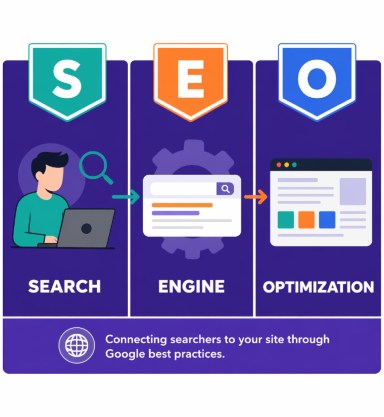
SEO, or Search Engine Optimization, is the process of improving a website’s visibility in search engine results pages. Traditionally, that meant helping specific pages rank when users searched for relevant terms.
At its core, SEO tries to answer one question:
How can a search engine trust this page enough to show it to users?
To answer that, search engines evaluate many signals, including relevance, quality, usability, authority, freshness, and technical accessibility.
The Core Goal of SEO
SEO is not for traffic only, but - Your actual goal, after all, is to build pages that map to user intent and are easy for search engines to find, decipher, and rank.
Google is not simply matching words when a person searches “best project management tools for agencies.” It is trying to infer intent. Comparative list: Is the user asking for a comparison? Reviews? Pricing? Free tools? Enterprise tools? Recent recommendations?
SEO works when you meet that intent better than the alternatives.
The Major Pillars of SEO
1. Keyword and Intent Optimization
SEO used to start with keywords, and that was true for years. Brands witnessed what search users fed and built pages around those words. That's still important, but modern SEO isn't stuffing exact terms anymore; it's more about matching the searcher's intent.
An effective SEO page responds to the user’s real intent, not just words in their search query.
Which means, good SEO content consists:
- Clear topical relevance
- Semantic coverage of related subtopics
- Answers to follow-up questions
- Writing or speaking as real users would search
- A structure to assist search engines in understanding the content.
2. On-Page SEO
On-page SEO refers to how content is written and structured on the page itself. This includes:
- Title tags
- Meta descriptions
- Heading hierarchy
- Internal linking
- Image alt text
- Clean URL structure
- Proper use of schema markup
- Readable copy with strong topical depth
A good page is easy for both humans and crawlers to understand.
3. Technical SEO
Technical SEO ensures search engines can access, crawl, render, and index your content properly. Even the best content can underperform if the website is technically weak.
Technical SEO includes:
- Site speed
- Mobile friendliness
- Crawlability
- Indexation control
- XML sitemaps
- Canonicals
- Structured data
- HTTPS security
- JavaScript rendering considerations
This is the infrastructure layer of visibility.
4. Authority and Backlinks
Backlinks are used by search engines as indicators of trust. When trustworthy sites link to your content that is like a vote of confidence.
Not all links are equal. In other words, only a few relevant and editorial links from reputable websites are more valuable than many low-quality backlinks.
To have authority in SEO, you usually need to:
- Original research
- Thought leadership
- PR and digital brand mentions
- Link-worthy resources
- Industry recognition
5. User Experience Signals
Search engines are increasingly focusing on which sites cause a good user experience. That includes:
- Fast loading times
- Easy navigation
- Helpful design
- Engaging content
- Low frustration
- Clear answers
SEO has always been about usefulness in practice. The tech has evolved, but the principle remains: search engines want to reward pages that facilitate users.
Why SEO Still Matters
AI will take SEO away from you. This misconception is that AI replaces SEO completely. So that is a surface level of what is going on.
SEO still matters because:
- Search has always been a huge volume discovery driver
- Most purchasing journeys start with a search
- AI systems frequently use high-ranking pages as source material
- SEO content fuels brand authority across the web
- Organic search is still one of the most high-leverage channels for compounding growth
This, in other words, from SEO, is still the base. However, the environment that surrounds it is changing rapidly.
What Is GEO? The Rise of Generative Engine Optimization
GEO stands for Generative Engine Optimization.
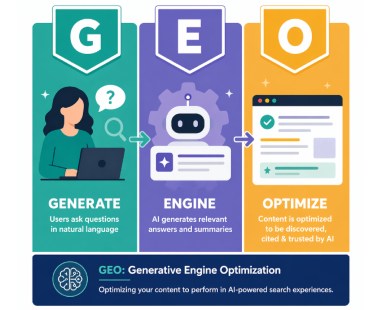
It refers to the process of optimizing content, brand presence, and digital authority so that AI-driven systems can understand, trust, retrieve, synthesize, and mention your information in generated responses.
If SEO helps you appear in search results, GEO helps you appear in answers.
Why GEO Exists
Traditional search engines present a ranked list of sources. The user chooses what to click.
Generative engines work differently. They:
- Interpret a prompt
- Retrieve relevant information
- Synthesize multiple sources
- Produce a direct answer
- Sometimes cite sources
- Sometimes recommend brands, frameworks, or products explicitly
That means visibility shifts from ranking position to inclusion probability.
The key question becomes:
Will the AI mention you, use your framework, cite your data, or recommend your product when answering the user’s query?
That is the problem GEO solves.
GEO Is Not Just “SEO for AI”
And this is where most people go wrong.
GEO isn't simply installing AI buzzwords onto an old SEO checklist. It is a new optimization layer designed for a different consumption model.
Successful SEO often means the user clicks through to your link.
In GEO, success can still happen without any direct visit from the user to your page. You might be valuable for one of the following reasons:
- Quoted in an AI answer
- Used as a trusted source
- Referenced as an authority
- Included in a comparison
- Recommended in a buying flow
- A thing that you are an entity associated with a topic.
That means GEO is partly about traffic, but also about brand inclusion, citation presence, topical authority, and machine-readable trust.
The Core Goal of GEO
The purpose of GEO is to increase the chances that generative systems select your content as part of their answer-generation process.
This requires content that is:
- Factually clear
- Context-rich
- Well-structured
- Credible
- Specific
- Easy to quote or summarize
- Supported by expertise and evidence
It also requires a strong brand footprint beyond your website.
AI systems do not only rely on your homepage. They may form confidence from your presence across:
- Author bios
- Reviews
- Knowledge bases
- Documentation
- Industry mentions
- Public profiles
- Community discussions
- News coverage
- Structured datasets
- Independent references
That is why GEO is as much about digital credibility architecture as it is about content writing.
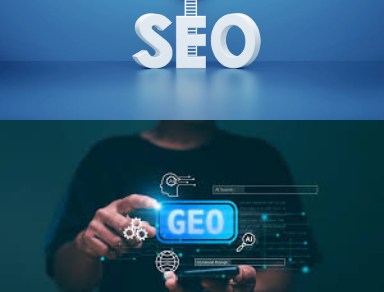
SEO vs GEO: The Real Difference Between Ranking and Being Referenced
The simplest way to understand the difference is this:
SEO optimizes for retrieval through rankings. GEO optimizes for retrieval through synthesis.
That sounds subtle, but it changes everything.
SEO Works Through Ranked Discovery
In traditional search, a user sees options. Visibility depends on:
- How high do you rank
- How compelling your title is
- How relevant your snippet looks
- Whether the user clicks
This is a competitive list-based model.
GEO Works Through Answer Inclusion
In generative systems, the user may never see a list. Instead, they get one consolidated response. Visibility depends on:
- Whether the system retrieves your content
- Whether your content is easy to interpret
- Whether your information feels reliable enough to use
- Whether your brand is prominent enough to mention
- Whether your explanation is structured enough to summarize accurately
This is a citation-and-synthesis model.
SEO Prioritizes Pages; GEO Prioritizes Entities and Assertions
SEO often thinks in terms of pages and keywords:
- Which page should rank for this term?
- Which cluster supports this article?
- What internal links reinforce relevance?
GEO thinks more in terms of entities and claims:
- Does the AI understand who your brand is?
- Does it associate your company with a specific topic?
- Does it trust your explanation enough to repeat it?
- Does it recognize your founder, product, framework, study, or methodology?
In SEO, you optimize pages.
In GEO, you optimize knowledge presence.
SEO Chases Clicks; GEO Chases Mentions, Citations, and Recommendation Share
SEO success metrics often include:
- Organic traffic
- Rankings
- CTR
- Sessions
- Conversions from search
GEO expands measurement into:
- Brand mentions inside AI outputs
- Share of voice in generative results
- Citation frequency
- Recommendation presence
- Inclusion in answer summaries
- Prompt-specific visibility
This does not mean clicks disappear. It means discoverability becomes more distributed.
SEO Can Sometimes Reward Surface Optimization; GEO Punishes Vagueness
Weak SEO content can occasionally still rank on a high authority domain, without the sharpest of targeting (eg, factoring in what competing sites are doing), especially with some long-tail keyword targeting.
Generic GEO content is often only as good as the system it is produced in, because generative systems need something to generate meaning from. Bogus pages, fluff copy, and generic marketing language are hard to extract and easy to ignore.
AI systems prefer content that is:
- Specific
- Direct
- Verifiable
- Well-organized
- Rich in context
- Authored with actual expertise
That is one reason why shallow content is becoming less defensible.
Why AI Is Changing Search Behavior Forever
The rise of GEO is not just a technical trend. It is a response to changing user behavior.
People are changing how they search because AI changes what feels possible.
Users Are Moving From Queries to Conversations
Traditional search behavior often looked like this:
- “best CRM for startups”
- “How to improve conversion rate.”
- “What is topical authority?”

AI behavior looks more like this:
- “I run a small agency with five employees. Which CRM should I pick if I need automations but have a limited budget?”
- “Compare three ways to improve conversion rate on a service website and tell me which is fastest to implement.”
- “Explain topical authority like I’m a content strategist, not a beginner.”
These are not just keywords. They are contextual prompts.
That means content must now support richer intent interpretation.
Users Want Synthesis, Not Just Source Lists
The internet has too much information. AI wins because it compresses complexity.
Users increasingly prefer:
- Summaries over endless browsing
- Recommendations over manual comparison
- Explanations over scattered fragments
- Decision support over raw options
This is especially true for busy professionals, buyers, students, and operators.
The value of content now lies not only in existing, but in being useful to the systems that summarize the web.
Search Is Becoming Multimodal and Task-Oriented
People now search with:
- Voice
- Natural language
- Follow-up prompts
- Images
- Documents
- Cross-platform workflows
And many of those queries are not purely informational. They are task-based:
- “Draft a content plan based on these competitors.”
- “Summarize this report and give me action steps.”
- “What tool should I buy based on my use case?”
In this environment, AI engines reward content that is operationally helpful, not just theoretically relevant.
Why GEO Matters for Brands, Publishers, and Marketers
GEO matters because AI systems are becoming gatekeepers of attention.
If people increasingly trust AI to summarize options, recommend products, and answer complex questions, then being absent from those systems means losing invisible market share.
GEO Shapes Brand Discovery Before the Click
A user may ask an AI:
- “What are the best SEO tools for agencies?”
- “Which skincare brands are dermatologists recommending?”
- “What’s the best payroll software for a remote startup?”
- “Who explains B2B positioning really well?”
If your brand is not included in those answers, you may lose consideration before the user ever sees your website.
This is a major shift. In old search, you could still win with an excellent title and snippet. In AI-mediated search, the shortlist may be formed before the click even becomes an option.
GEO Influences Perception, Not Just Traffic
When an AI describes your brand, that description matters.
It may frame you as:
- Budget-friendly
- Enterprise-grade
- Beginner-friendly
- Authoritative
- Reliable
- Niche
- Innovative
- Trusted by experts
So GEO is not only about being present. It is about shaping how you are interpreted.
That means your digital footprint must consistently communicate:
- What you do
- Who you serve
- Why are you credible
- What differentiates you
- What evidence supports your claims
GEO Rewards True Expertise
This is good news for brands with real substance.
If your company has:
- Original insights
- Strong documentation
- Experienced authors
- Case studies
- Public proof
- Product depth
- Clear point of view
Then GEO allows you to win beyond traditional ranking mechanics.
Because generative engines often need trustworthy source material, genuine expertise becomes more valuable.
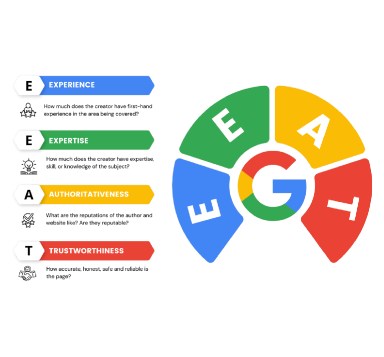
The Role of EEAT in GEO: Why Trust Becomes the Main Ranking Layer
If there is one concept that becomes even more important in the GEO era, it is EEAT:
Experience, Expertise, Authoritativeness, and Trustworthiness.
In traditional SEO, EEAT mattered strongly in quality evaluation, especially in sensitive topics. In the GEO era, it becomes foundational because AI systems are far more likely to use content they can interpret as credible.
Experience: Have You Actually Done the Thing?
Experience means the content reflects real-world involvement.
A product review written by someone who has used the tool feels different from a generic rewrite of public features. A marketing strategy article written by someone who has run campaigns carries a different weight than a thin summary pulled from other blogs.
To demonstrate experience, content should include:
- First-hand observations
- Specific workflows
- Real examples
- Use-case nuance
- Lessons from implementation
- Evidence of practice
In GEO, this matters because specificity is a credibility signal. Generic content is easy to ignore. Lived knowledge stands out.
Expertise: Do You Know What You’re Talking About?
Expertise is the depth of understanding.
AI systems may not “believe” in the human sense, but they still rely on patterns that correlate with high-quality information. Content that explains concepts accurately, deeply, and clearly is more usable than vague or derivative copy.
Expertise shows up through:
- Correct terminology
- Clear explanations
- Strong framing
- Nuanced analysis
- Coverage of edge cases
- Helpful comparisons
- Accurate interpretation
In GEO, expertise increases the chance your content is selected as a source worth summarizing.
Authoritativeness: Does the Web Recognize You?
Authority is not just self-claimed. It is externally reinforced.
Your brand becomes more authoritative when others mention, cite, review, interview, or recommend you. Authority can come from:
- Industry publications
- Backlinks
- Expert mentions
- Podcast appearances
- Conference talks
- Academic references
- Community trust
- Strong brand searches
Generative engines are more likely to surface entities that appear consistently across the broader web.
Trustworthiness: Can Your Information Be Relied On?
Trust is the most important part of EEAT because it underpins the other three.
Trust signals include:
- Accurate facts
- Transparent sourcing
- Honest claims
- Updated information
- Clear ownership
- Editorial standards
- Secure website practices
- Real contact and company details
If your content looks manipulative, exaggerated, or uncertain, it becomes harder for both humans and machines to rely on it.
Why EEAT Is Even More Important in GEO Than in Old SEO
In traditional SEO, a user could compare multiple pages and decide whom to trust.
In generative search, the system often makes that filtering decision first.
That means weak trust signals can remove you from the answer-generation layer entirely.
So if you want GEO performance, your content strategy must be built on EEAT from the ground up, not pasted on afterward.
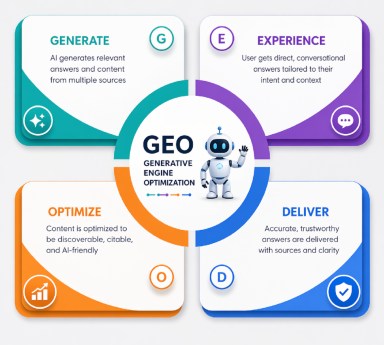
How to Create Content That Performs in Both SEO and GEO
The future does not belong to SEO-only content or GEO-only content. It belongs to content that works across both systems.
Here is what that looks like.
1. Write for Questions, Not Just Keywords
Keyword research still matters, but you should go beyond static terms and map:
- Core questions
- Comparison prompts
- Decision-stage queries
- Objection-based searches
- Long-tail conversational phrasing
Think in terms of what a human asks an AI assistant, not just what they type into a search box.
2. Make Your Content Easy to Extract
Generative systems work better with content that is easy to parse and summarize.
That means using:
- Clear headings
- Direct definitions
- Bullet-style distinctions were useful
- Step-by-step explanations
- Comparison sections
- FAQs
- Strong opening summaries
- Explicit conclusions
A page should not hide its value behind long, vague intros.
3. Add Originality and Proof
If your content says the same thing as everyone else, there is little reason for AI to select it.
Add:
- Proprietary insights
- Internal data
- Contrarian interpretation
- Frameworks
- Case studies
- Examples from practice
- Expert quotes
- Clear point of view
Originality creates citation value.
4. Build Strong Entity Signals
Make it easy for machines to understand:
- Who wrote the content
- What company published it
- What the company specializes in
- What products or services are offered
- What topics does the brand own
Use consistent brand language, author pages, about pages, organization details, and structured markup where relevant.
5. Update Content Aggressively
AI systems favor relevance and current usefulness. Outdated content may still rank occasionally, but it becomes less reliable as source material.
Refresh:
- Statistics
- Examples
- Product references
- Comparisons
- Industry changes
- Best practices
Freshness is not just an SEO advantage. It is a trust advantage.
6. Create Multi-Layered Topical Depth
Do not publish isolated pages. Build topic ecosystems:
- Pillar pages
- Supporting articles
- Glossaries
- Templates
- Tutorials
- Case studies
- Comparison pages
- Expert commentary
This strengthens your topical authority in both search and generative environments.
The GEO Content Pattern: How to Structure AI-Era Content Properly
Since you asked to follow the GEO pattern, here is the practical content structure that works especially well for generative discoverability.
1. Start With a Clear, Direct Answer
The first section should immediately define the topic. This helps both users and machines understand what the page covers.
2. Expand Into Context and Nuance
After the direct answer, explain why it matters, how it evolved, and what the reader should understand next.
3. Use Clean Heading Logic
Every H2 should answer a major sub-question. Every H3 should deepen that answer. Avoid decorative headings that sound clever but say nothing.
4. Include Comparisons and Distinctions
AI systems love structured contrasts because they are easy to synthesize. “SEO vs GEO” works well when differences are explicitly spelled out.
5. Add Experience and Evidence
A strong GEO article should not feel anonymous. It should carry perspective, examples, and informed interpretation.
6. End With Actionable Takeaways
Do not stop at explanation. Help the reader decide what to do next.
This pattern improves:
- Readability
- Answer extraction
- Citation potential
- AI summarization quality
- User satisfaction
Common Mistakes Brands Make When Trying to Do GEO
Treating GEO as a Trendy Keyword Trick
Some brands think GEO means sprinkling terms like “AI search” into old content. That is not enough. GEO is about how information is structured, trusted, and surfaced in generative systems.
Publishing Generic AI-Written Content at Scale
Mass-produced content without expertise, review, or originality may look efficient, but it tends to be weak in trust, nuance, and usefulness. That makes it fragile in both SEO and GEO.
Ignoring Author Credibility
Anonymous content is increasingly a liability. Readers and systems both need stronger signals of who is behind the information.
Focusing Only on Rankings
If your reporting only tracks traffic and rank positions, you may miss the emerging layer of AI visibility. Your brand can lose recommendation share before the traffic decline becomes obvious.
Forgetting Brand Narrative Consistency
If your website, LinkedIn presence, reviews, PR mentions, and third-party descriptions all say different things about your company, AI systems get a fuzzy picture. Clarity wins.
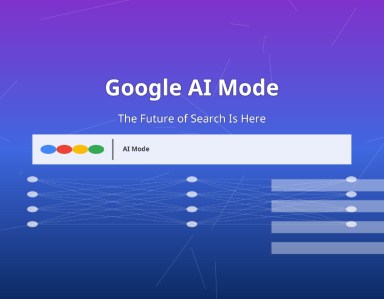
The Future of Search: SEO and GEO Will Coexist, But GEO Will Shape the Next Decade
The future of search is not a clean replacement. It is a hybrid ecosystem.
Traditional search will remain important. Many users will still browse results, compare sources, and click through to websites. SEO will continue driving discovery, demand capture, and long-term organic growth.
But GEO will increasingly shape:
- Brand inclusion in AI answers
- Product recommendations
- Expert citations
- Research summaries
- Buying guidance
- Knowledge-layer visibility
The companies that win will not choose between SEO and GEO. They will integrate both.
They will create content that ranks, teaches, proves, and gets remembered.
They will invest in technical health, yes, but also in authority architecture.
They will optimize pages, but also entities.
They will write for search engines, users, and generative systems simultaneously.
And above all, they will understand that trust is becoming the real interface of discoverability.
FAQ: SEO vs GEO
No. GEO is not replacing SEO. It is expanding the way digital visibility works. SEO still matters for rankings and traffic, while GEO matters for AI answer inclusion and citations.
Conclusion: From Search Rankings to Answer Presence
SEO built the first era of organic visibility. GEO is shaping the next one.
SEO asks: How do we rank?
GEO asks: How do we get included in the answer?
That shift matters because AI is compressing the path between question and decision. Users are no longer just searching. They are asking, comparing, delegating, and expecting synthesis.
In that world, content must do more than attract clicks. It must be structured enough to extract, credible enough to trust, useful enough to cite, and distinctive enough to remember.
That is why the future belongs to brands that combine:
- strong SEO fundamentals,
- GEO-aware content design,
- and real EEAT signals.
The winners in the AI-era search will not be those who publish the most content. They will be those who publish the most useful, most credible, and most reference-worthy content.
That is the future of search.
And it has already started.

Search
Categories
Recent Posts
- 20 Dec, 2024 Building Brand Loyalty: How Custom Mobile Apps Drive Business Success
- 17 Jan, 2025 Designing An Attractive and Truly User-Friendly Website!
- 23 Dec, 2024 Driving Sales Through Online Channels: Transforming Your Business with a Webshop
- 09 Sep, 2024 Enhancing Customer Engagement: The Business Benefits of Mobile App Development
- 23 Dec, 2024 Expanding Market Reach: The Strategic Value of an E-commerce Webshop
- 10 Mar, 2026 Google Review Card: NFC vs QR – What Works Better?
- 01 May, 2026 Google Tools for Websites: A Complete, Detailed Guide for Website Owners, Developers, and Marketers
- 09 Sep, 2024 Harnessing Professional Web Design: Elevating Your Business’s Online Presence
- 13 Jun, 2026 Headless CMS vs Traditional CMS: Which Should Your Business Choose?
- 09 Sep, 2024 How an Online Delivery System Empowers Business Operations
- 07 Aug, 2026 How can a Dutch company get cited in ChatGPT, Gemini, Perplexity, and Copilot answers?
- 18 Sep, 2026 How can I choose a reliable web development company in the Netherlands?
- 07 Sep, 2026 How do I improve local visibility in ChatGPT and Microsoft Copilot, not just Google Maps?
- 20 Jan, 2025 How To Build A Custom Website For Your Business?
- 31 Aug, 2026 How to Choose a Digital Marketing Agency in the Netherlands: Services, Costs and a Practical Checklist
- 20 Jan, 2025 How To Create A Professional Website For Building Online Presence?
- 02 Aug, 2024 How to Plan a Perfect Digital Market
- 25 Jun, 2026 How to Work With a Web Design Agency to Grow Your Online Presence?
- 23 Dec, 2024 Investing in Website Development: Enhancing Customer Engagement and Conversion Rates
- 23 Dec, 2024 Meeting Customer Expectations: The Competitive Edge of an Online Delivery System
- 23 Dec, 2024 Optimizing Logistics: Enhancing Business Agility with an Online Delivery System
- 17 Jan, 2025 Optimizing Your Website with a Website Builder in Amsterdam
- 20 Jul, 2026 Progressive Web Apps (PWA) vs Native Apps
- 22 Apr, 2026 SEO vs GEO: The Future of Search in the Age of AI
- 03 Apr, 2026 The 10 Biggest Mistakes When Building a Website – and How to Avoid Them
- 27 Dec, 2025 The Cost of Getting a Website Made: What You Can Expect in the Netherlands?
- 09 Sep, 2024 The Essential Role of Online Marketing for Businesses
- 20 Dec, 2024 The Power of Digital Storytelling: Leveraging Online Marketing to Connect with Customers
- 23 Dec, 2024 The Strategic Advantage of a Well-Designed Website for Business Growth
- 23 Dec, 2024 Unlocking Market Potential: How Strategic Digital Marketing Propels Business Success
- 09 Sep, 2024 Unlocking Revenue Streams: Establishing an Online Webshop for Your Business
- 06 Jul, 2026 Web Performance Optimisation: Core Web Vitals
- 03 Aug, 2026 What is an E-commerce Website and How Does It Work?
- 27 Mar, 2026 What is sitemap.xml and Why Is It Important for SEO?
- 15 Apr, 2026 What Is the Difference Between Shopify and WordPress?
- 15 Jan, 2026 What Makes a Website Design User-Friendly?
- 30 Jul, 2026 What’s Allowed/Not Allowed With Google Reviews?
- 21 Mar, 2026 What’s Involved in Having a Website Created: A Step – by – Step Guide
- 27 Feb, 2026 What’s Involved in Having a Website Created: A Step-by-Step Guide
- 21 Jan, 2025 Why Consider WordPress for Website Builder?
- 21 Jan, 2025 Why Do Businesses Hire WordPress Website Builder Companies?
- 20 Jan, 2025 Why Does Your Business Need a Local Web Design Agency?
- 12 Aug, 2026 Why Is My WordPress Website Slow and How Can I Fix It?
- 11 Dec, 2025 Why You Should Have a Professional Website Built in 2026: What’s Changing?