

Google Review Card: NFC vs QR – What Works Better?
When businesses discuss review cards, the conversation often begins with technology - NFC or QR, tap or scan, modern or familiar. Yet customers never experience review cards as technology. They experience them as moments. A brief pause at the counter. Wait at the table. The final step before leaving a store or finishing a meal. In those moments, the only question that matters is not how the system works, but whether leaving a review feels effortless or interruptive.
Where customers value clarity, efficiency, and low-pressure interactions, the difference between NFC and QR is rarely about innovation. It is about behaviour - how much thinking is required, how much movement is needed, and whether the action feels natural within the environment. Review cards succeed when they remove friction at exactly the right moment, not when they showcase the newest method. This is precisely why many businesses choose to buy the Google Review NFC Card as a practical, behaviour-aligned solution rather than a technical upgrade.
Understanding how people actually respond to review prompts changes the comparison entirely. NFC and QR are not competitors in a technical sense; they are different ways of reducing effort under different conditions. The effectiveness of each depends on how closely it aligns with real customer behaviour, not assumed preferences.
How Customers Actually Engage With Review Cards
This section grounds the comparison in observable behaviour rather than design theory or technical capability.
1. Review Actions Are Almost Always Unplanned
Most customers do not arrive at a restaurant, shop, or service location planning to leave a review. Reviews happen impulsively, triggered by a moment of satisfaction combined with immediate access. When customers are asked to “remember later,” intent fades quickly. The emotional peak that motivates a positive review passes, and daily distractions take over.

Successful review cards intercept that brief window of goodwill. They work best when the action can be completed instantly, without requiring memory, follow-up, or explanation. Whether NFC or QR performs better depends largely on how well it captures this unplanned moment without breaking the customer’s flow.
2. Small Frictions Create Big Drop-Offs
Behavioural research consistently shows that even minor additional steps significantly reduce completion rates. Unlocking a phone, opening a camera, focusing on a code, waiting for recognition, then tapping a link introduces multiple decision points. Each step increases the chance of abandonment.
Review cards that minimize these micro-frictions see higher follow-through. The difference between one action and three actions may appear small, but in practice, it determines whether intent turns into completion. Customers rarely articulate this friction consciously; they simply move on.
3. Social Awareness Influences Willingness
Context matters. Customers behave differently when others are present. At a busy counter or checkout area, people are more aware of queues, staff, and fellow customers. They avoid actions that feel slow, visible, or awkward. In quieter settings, such as seated tables or waiting areas, customers are more open to deliberate interaction.
A review method that works well in one social environment may underperform in another. The effectiveness of NFC or QR shifts depending on whether the interaction feels discreet or performative in that space.
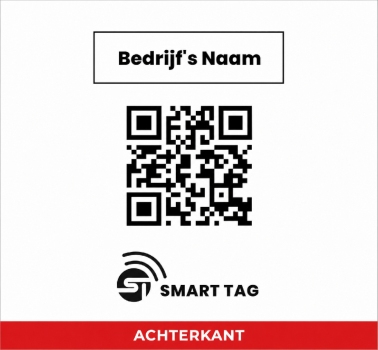
NFC as a Review Card Technology
NFC is often described as modern or advanced, but its real strength lies in how little the user has to think about it.
How NFC Triggers a Review Flow
Immediate proximity-based activation
It's close to your body, and it only means that if you've got an NFC-enabled phone, the chip would be detected as soon as a millimetre or two of entering the area," he said. It means you don’t have to open your camera or an app at all, and the action remains fast and uniform.
Automatic redirection without decision-making
Upon detecting, the phone triggers the associated action on its own, e.g. by directly opening the review interface. The user is being led, with no prompting, to select the next steps.
Familiar interaction patterns
The tapping motion corresponds to common contactless practices, such as those used with payment or access cards. As it is already inherent in their everyday habits, users naturally trust the interaction.
Subtle confirmation cues
Haptic feedback or a short onscreen indicator can provide immediate confirmation of success, offering users reassurance without being too intrusive.
Why NFC Often Feels “Invisible” to the User
Reduced cognitive effort
There are no instructions or visual cues to read with NFC. The user has to do little, enabling the phone to do its part on a human level.
Passive rather than intentional behaviour
It feels like a natural, intuitive extension of everyday smartphone use rather than something you need to do on purpose. This fits nicely into impulsive actions, like leaving a brief review.
Lower social visibility
The interaction is now done quietly and discreetly, which makes users more comfortable about what they do in public areas without feeling disturbed or being watched.
Short interaction time
The quicker the exchange, the less it allows for wavering. Speed also delivers a project before needing to second-guess.
Situations Where NFC Interaction Breaks
Disabled NFC settings
NFC is also disabled by default on many devices, meaning activation would need to be manually enabled by most users (which they are unlikely to do in the spur of the moment).
Physical interference
Heavy phone cases, metallic covers, or other metal objects may interfere with the signal weakening detection.
Device limitations
The “tap-to-share” protocol won’t work on older or lower-end phones, which results in an abrupt dead end when nothing else can be offered.
Unclear tap positioning
Users might not even know where to hold their phone; continued unsuccessful trying can leave them unwilling to interact at all.
Why These Failures Are Often Misinterpreted
Assumption of technical failure
People point the finger at the technology more than at what’s happening around it. One failed attempt is frequently all it takes to completely abandon the system.
Lack of visible guidance
There’s nothing subtle about it, and there’s no safety net - there is no way to know what just happened.
Time sensitivity of intent
The urge to review passes quickly. The attention is fleeting, and once it’s gone, that moment never comes back.
Design dependency beyond the chip
NFC acceptance is influenced as much by placement, the clarity of instruction, and redundancy. Good design makes up for technical oddities and keeps meaning.
QR Codes as a Review Card Technology
QR codes have a different relationship with users, shaped largely by familiarity and visibility.
Why QR Codes Are Universally Recognized
QR codes became immensely popular during the pandemic, especially in hospitality and stores all over the Netherlands. Customers quickly learned to scan menus, access forms, and find information. This familiarity reduces hesitation. Users mostly already know what a QR code means and does.
This predictability gives the feeling of security and confidence in certain environments.
The Visual Commitment Required to Scan
Scanning a QR code requires an action on the part of the user. You have to launch the camera, find the code, and wait for it to be recognized. This visual display is a pledge, not a mere act of impulse. This may slow down interaction, but it also provides a sense of power to users. And some users like knowing fully what they are about to click on, of course, especially in matters related to privacy or data.
When QR Codes Perform Surprisingly Well
QR codes tend to perform best in stable environments where customers already have their phones in hand - such as while seated at a table, waiting to be served, sitting in an outdoor area, or collecting takeaway orders. In these situations, there is enough time for a more deliberate interaction, and the visible presence of the code can act as a gentle reminder rather than a prompt. While a Google Review NFC Card prioritizes immediacy, QR codes remain effective where patience and attentiveness are naturally higher, and the customer is already in a waiting mindset.
Accessibility and Inclusivity Differences
Accessibility goes beyond device compatibility and includes comfort, confidence, and physical ease.
Device compatibility
QR codes only need a functioning camera and work on virtually all recent smartphones. This generality reduces the risk of technical marginalization. Whereas NFC relies on hardware and settings. Although more common with modern handsets, it can silently ignore users with unsupported or disabled NFC, so that fallbacks are a must.
Age and tech confidence
For the youngest audiences, NFC and QR are all but blurred into one another. Older customers or the less tech-confident among them also prefer actions that offer some sort of tangible confirmation. QR codes have the benefit of feeling like a straightforward visual process: open the camera, scan, and see the result - that can be more reassuring and clear than responding to an invisible tap.
Physical accessibility
Physical capacity is an important factor for social well-being in interaction with others. To scan a QR code, the user needs steady hands and even lighting and must align the QR code with their camera’s “frame” (as opposed to just pointing at it). This can be difficult for individuals who have limited use of their hands and vision. NFC might take away some of this hassle by doing a simple tap when placement is obvious, and detection works well. Loose placement, iffy tap sizes can just as quickly reverse that benefit.
Each method serves different accessibility needs, and neither can be considered universally inclusive on its own.
Speed vs Control in Review Completion
This comparison highlights the trade-off between immediacy and reassurance.
Why Faster Access Increases Completion
When a review request reaches a customer at the peak of a positive experience, speed becomes decisive. The smaller the gap between intention and action, the lower the risk of hesitation or distraction. Immediate access helps preserve emotional momentum, turning what might otherwise remain a fleeting impulse into a completed review. This is where a Google Review NFC Card proves effective by enabling instant action at the right moment.
By removing intermediary steps and reducing cognitive effort, NFC allows the experience to be captured seamlessly, without breaking the natural flow of the customer journey.
Momentum matters more than motivation
Customers are usually willing, but only briefly. Fast access captures that willingness before it fades.
Reduced time for doubt
Each extra second introduces room for second thoughts, especially in busy or public environments.
Minimal physical interaction
A single tap feels effortless compared to multi-step actions, lowering the mental barrier to completion.
Seamless transition from experience to action
NFC allows the review process to begin while the positive impression is still fresh.
Why Some Users Prefer Visual Confirmation
Not all users prioritize speed. For some, trust and clarity are more important than immediacy. By providing visual feedback when clicking allow, the user can feel secure in knowing what they’re about to do and where it will take them. QR codes allow for this preference by providing a visible and predictable process, one that can instill confidence even if it adds a step.
Transparency builds comfort
Seeing the link destination or interface before proceeding reduces uncertainty.
Perceived control encourages participation
Users feel more in charge when they can observe and confirm each step.
Familiar visual routines
Opening a camera and scanning a code mirrors other everyday digital actions, reinforcing comfort.
Trust outweighs speed for some users
When users feel secure, they are more likely to complete the review despite slightly slower access.
Environmental Performance Differences
Performance varies significantly depending on the physical context.
Counter and Checkout Areas
Counters and checkout aisles subtly pressure customers by demanding time in certain scenarios. Payments, packing and social awareness vie for your multitasking state of mind. Each of these moments needs interactions that are short, instinctive, and require, for example, only one hand. NFC is a natural fit with this type of behaviour, mirroring contactless payment behaviours and requiring little or no visual attention. It’s as easy as tapping their phone already in hand, and it lets the customer keep moving where they’re moving without slowing down the transaction groove. QR scanning, by contrast, often seems clunky to do here because it involves opening the camera and training your phone on the code somewhere where you’re not necessarily going to stop and bed down for some time.
Tables, Waiting Areas, and Seated Moments
Sitting contexts produce an alternative behavioural setting. Customers are no longer in a hurry and are more willing to take small, purposeful steps. When time permits, QRs often work better as users can easily scan, read the item on their screen and then decide whether they want to proceed. The QR interaction is visible in these slower beats and compares well when the priority is clarity and confirmation over speed. NFC is still good, but there’s less of an edge when we’re all already sitting and not in a hurry to jet.
Takeaway and On-the-Go Contexts
The context for takeaways and transit is characterised by limited attention spans and constant motion. Passengers are in a hurry to reach their next stop and are not interested in pausing to take it all in. Time is of the essence here. Immediate: Because NFC transactions are so quick, people can tap and interact without even thinking about it or while they walk and multitask. Quicker to scan, less likely you’ll skip QR entirely! When movement and distraction prevail, the easiest possible interaction is most likely to get performed.
Behaviour Patterns in the Netherlands
Local behaviour strongly influences effectiveness.
Preference for Direct, Low-Effort Actions
Dutch customers are typically practical in how they do services and deals. The ones that feel efficient, easy to follow, and respectful of time will be accepted more often. An action that does not make sense, is too complex or over-instructive, is forgotten more often than it is questioned. NFC is a great fit with this way of thinking because it’s all about doing without having to tell first. A quick, subtle tap feels more like an extension of normal behaviour than a marketing ask - that is, if it’s immediately clear what you’re supposed to be doing and the experience itself is frictionless.
Discomfort With Over-Prompts
There is a particular aversion in the Netherlands to messaging that comes across as aggressive or too persuasive. Too much describing, too big of calls-to-action, and repeated please-click-this prompts can work against you, not for you. People like to be asked what to do, not told. Those that silently provide access, without requiring attention or a reason for the request, do best. When the interaction feels voluntary and not invasive, contact efforts are more likely to elicit a positive response in the way that subjects prefer, resulting in higher quality engagement.
Why Fallback Options Matter More Than the Primary Choice
This reframes the comparison from competition to resilience.
What Happens When the First Method Fails
When a customer tries to write a review and their interaction isn’t working the way they expect, that intention has been lost. Reviews are powered by timing and feeling, not stubbornness. Once access is failed, the majority of users don’t attempt again later or seek another way. The break disrupts the flow, and one is once again paying attention to where they are. Without a visible plan, the deal simply crumbles into obscurity, no matter how great the product looked.
How Redundancy Improves Trust
Supporting NFC and QR as options sends the message of 'considerate' rather than 'tech-y'. Redundancy is comforting to users because it means the business accounts for various devices, preferences and abilities. When people like to an option right now, instead of getting annoyed, they feel empowered, and the conversation ( pun intended ) goes on. It's this little act of caring that builds trust long before the review is ever written.
Using NFC and QR Together Without Confusion
Reversible review cards can also be very good - but only if they influence game play instead of offering choices. If NFC and QR are the either/or choice, users have to decide how they want to act instead of just acting. The point isn't flexibility for its own sake, but in fact reliability - we want to continue to be able to have that review flow when one way is inaccessible. It just has to do with visual structure and instructional discipline.
Visual Hierarchy in Dual - Access Cards
One interaction should feel like the default path
The main point of entry should be obvious through its size, location, or visual emphasis. When users intuitively know where to tap, or scan, first, they accept that clue and do not even consider alternatives.
Secondary access should remain visible but understated
The fallback needs to be able to find without competing for attention. It maintains the user's confidence when he does need an alternative, but doesn't clutter his mental space with visual noise that hampers decision-making.
Positioning communicates priority without explanation
Top of the fold, centred along the top to the call-to-action implies something obvious. Users read the layout, not the words; therefore, spatial hierarchy works better than written instructions.
Design consistency reinforces trust
Because graphic and material complement the local environment as well as the brand aesthetic, interaction appears to be planned rather than casual. This can also help to eliminate any confusion and provide a supportive push over the finish line.
What Happens When Instructions Compete
Multiple calls to action divide attention
When it comes down to NFC and QR being put forward relatively equally, people hit the pause in deciding, vs. adopting. That pause is often enough to stop momentum, particularly in crowded public spaces.
Explanatory text increases perceived effort
Messages that tell the user to tap, scan, or choose add useless cognitive load. Users start to interpret and process information, not just react reflexively.
Unclear priority leads to abandonment
And in situations where one interaction is not clearly a user’s preferred method, users often discontinue the engagement altogether, unsure of what they are doing or supposed to be doing.
Flow depends on reducing decisions, not adding options
The best twin-access cards nudge you to behave quietly. They eliminate the requirement of going to compare or interpret and maintain that very flow that brings about intent for completed reviews.
Mistakes That Reduce Review Card Effectiveness
Overdesigning the card
Review cards work well when their purpose is obvious. Too many graphics, decorations or layered messaging can obscure the attention that a card is meant to prompt. As users visually search through the colours, compare icons or text, this instance of intent loses power. Simplicity saves the effort of decision-making and lets us feel we are not being promoted to. A crisp design helps the card match its surroundings, while still giving a clear hint of what lies inside.
Explaining too much
Lengthy instructions inadvertently increase the perceived effort of writing a review. If you make customers go through several steps to activate something, or at least read and compare, you do lose attention. Inhibitory effects on behaviour, including hesitation (in public or with time constraints). The best review cards are based on intuitive triggers rather than explanations; this lets the process flow without engaging the conscious mind.
Hiding the purpose
Where it is not immediately apparent that playing a card triggers a review, intention is replaced by doubt. When they’re not sure where a tap or a scan will lead, particularly if they feel self-conscious in public. Transparency is how trust gets created; we are setting up the expectations first. If users are clear about what’s going to happen before they interact, they’re far more likely to click through. Transparency eliminates doubt and helps facilitate confident, friction-free movement forward.
Each mistake introduces friction that undermines intent.
Evaluating What Works for Your Business
Evaluation should focus on outcomes, not assumptions.
Patterns in Review Timing
The timing of these reviews provides insight into the timing at which customers engage with review requests in the wild. Reviews posted soon after a transaction, the conclusion of a service or a moment of pleasure are often an indication that access was immediate and easy. A dashboard of these patterns illustrates which positionings and contexts resonate with consumer attention. (When the reviews finally come in hours or days later, they tend to rely on reminders or memory, which introduces dropout risk.) Timing analysis can be used to help businesses recognize instances when intent is strongest and optimize review touchpoints for those periods of elevated engagement.
Consistency vs Spikes
A gradually accumulated number of reviews tells more than a few wagons. Upward trends also indicate that review access in the customer experience is consistently working across differing days, employee shifts, and types of customers. Spikes, however, are typically due to transient factors such as campaigns, particular events or an increase in staff prompting. While those moments can drive short-term attention, they don’t tend to keep it. Sustained success is produced by systems that work quietly and repeatedly, generating contented, reliable outcomes rather than erratic explosions.
Choosing Based on Context, Not Trends
No access method gives uniformly good results in all situations. Its effectiveness is determined by context: where the card appears, what task a customer is trying to achieve at that exact moment and how much attention they can realistically give. A checkout counter instills urgency and the possibility of one-handed interaction. What is entirely suitable in one context can be intrusive or ill-fitting in another. These nuances, barely perceptible at times, yet crucial, are left out of decisions that rely on popularity and perceived modernity.
Successful review systems are constructed by watching behaviour, not chasing fads. Customers do not often weigh technology itself, but how seamlessly an action fits into their flow. When the access converges with how we already naturally move, when and where we can attend to something, the method goes nearly invisible - and that invisibility is also where things get finished. Picking the right path means designing for real moments - not idealized scenarios - and understanding that technology is at its best when it evolves to serve behaviour, rather than leading the charge.
Frequently Asked Questions
NFC can feel faster because it removes steps, but actual speed depends on phone compatibility and setup. In ideal conditions, NFC reduces friction, while QR offers more predictable performance across devices.
Conclusion - The Best Review Card Reduces Thinking, Not Choice
The effectiveness of a review card is hardly related to whether it has been responsively designed or created using NFC/QR technology, and in fact, everything turns upon how naturally it sits within the customer’s moment. Reviews are when you take out doubt, not put it in. Simplicity, clarity, and relevance win over novelty or techiness every time. In a world where access becomes intuitive and frictionless, consumers behave without overthinking. When tiny barriers pop up, so does the will to do anything.
And technology works best when it remains in the background. NFC and QR thrive in a context where they don’t try to change the trajectory of existing behaviours, but support them. The best review systems are built around real-world, actual timing and the actual humans that use it - how we’re holding our phone, what we’re paying attention to, how much work we will undergo before closing a task.
This is where good design and disciplined execution come into play. Review cards are not individual tools; they’re touchpoints in the customer journey. Their effectiveness thrives on position, strategy, successiveness and reliability in the long term. Companies that take an intentionally strategic approach to review access - rather than hopping on a trend - establish consistent, sustainable visibility over time rather than sporadic jumps in awareness.
This clarity is also reinforced by the colour selection and layout choices. Colours are there to draw attention, not scream for it; layouts provide a lot of natural room for content to breathe. The type is kept nice and clean, easy to read; it’s serious but not too serious. This is especially true in the case of B2B transactions, where customers are far more influenced by credibility, trust and relationships than they are by emotions. The design doesn’t steamroll the business - it buoys the business.
For businesses that want review access methods designed around real customer behaviour instead of assumptions, The Webdesign Agency helps structure smart, reliable review touchpoints that support long-term visibility and trust.

Search
Categories
Recent Posts
- 20 Dec, 2024 Building Brand Loyalty: How Custom Mobile Apps Drive Business Success
- 17 Jan, 2025 Designing An Attractive and Truly User-Friendly Website!
- 23 Dec, 2024 Driving Sales Through Online Channels: Transforming Your Business with a Webshop
- 09 Sep, 2024 Enhancing Customer Engagement: The Business Benefits of Mobile App Development
- 23 Dec, 2024 Expanding Market Reach: The Strategic Value of an E-commerce Webshop
- 10 Mar, 2026 Google Review Card: NFC vs QR – What Works Better?
- 01 May, 2026 Google Tools for Websites: A Complete, Detailed Guide for Website Owners, Developers, and Marketers
- 09 Sep, 2024 Harnessing Professional Web Design: Elevating Your Business’s Online Presence
- 13 Jun, 2026 Headless CMS vs Traditional CMS: Which Should Your Business Choose?
- 09 Sep, 2024 How an Online Delivery System Empowers Business Operations
- 07 Aug, 2026 How can a Dutch company get cited in ChatGPT, Gemini, Perplexity, and Copilot answers?
- 18 Sep, 2026 How can I choose a reliable web development company in the Netherlands?
- 07 Sep, 2026 How do I improve local visibility in ChatGPT and Microsoft Copilot, not just Google Maps?
- 20 Jan, 2025 How To Build A Custom Website For Your Business?
- 31 Aug, 2026 How to Choose a Digital Marketing Agency in the Netherlands: Services, Costs and a Practical Checklist
- 20 Jan, 2025 How To Create A Professional Website For Building Online Presence?
- 02 Aug, 2024 How to Plan a Perfect Digital Market
- 25 Jun, 2026 How to Work With a Web Design Agency to Grow Your Online Presence?
- 23 Dec, 2024 Investing in Website Development: Enhancing Customer Engagement and Conversion Rates
- 23 Dec, 2024 Meeting Customer Expectations: The Competitive Edge of an Online Delivery System
- 23 Dec, 2024 Optimizing Logistics: Enhancing Business Agility with an Online Delivery System
- 17 Jan, 2025 Optimizing Your Website with a Website Builder in Amsterdam
- 20 Jul, 2026 Progressive Web Apps (PWA) vs Native Apps
- 22 Apr, 2026 SEO vs GEO: The Future of Search in the Age of AI
- 03 Apr, 2026 The 10 Biggest Mistakes When Building a Website – and How to Avoid Them
- 27 Dec, 2025 The Cost of Getting a Website Made: What You Can Expect in the Netherlands?
- 09 Sep, 2024 The Essential Role of Online Marketing for Businesses
- 20 Dec, 2024 The Power of Digital Storytelling: Leveraging Online Marketing to Connect with Customers
- 23 Dec, 2024 The Strategic Advantage of a Well-Designed Website for Business Growth
- 23 Dec, 2024 Unlocking Market Potential: How Strategic Digital Marketing Propels Business Success
- 09 Sep, 2024 Unlocking Revenue Streams: Establishing an Online Webshop for Your Business
- 06 Jul, 2026 Web Performance Optimisation: Core Web Vitals
- 03 Aug, 2026 What is an E-commerce Website and How Does It Work?
- 27 Mar, 2026 What is sitemap.xml and Why Is It Important for SEO?
- 15 Apr, 2026 What Is the Difference Between Shopify and WordPress?
- 15 Jan, 2026 What Makes a Website Design User-Friendly?
- 30 Jul, 2026 What’s Allowed/Not Allowed With Google Reviews?
- 21 Mar, 2026 What’s Involved in Having a Website Created: A Step – by – Step Guide
- 27 Feb, 2026 What’s Involved in Having a Website Created: A Step-by-Step Guide
- 21 Jan, 2025 Why Consider WordPress for Website Builder?
- 21 Jan, 2025 Why Do Businesses Hire WordPress Website Builder Companies?
- 20 Jan, 2025 Why Does Your Business Need a Local Web Design Agency?
- 12 Aug, 2026 Why Is My WordPress Website Slow and How Can I Fix It?
- 11 Dec, 2025 Why You Should Have a Professional Website Built in 2026: What’s Changing?