


What is sitemap.xml and Why Is It Important for SEO?
Search engines don’t view websites the same way people do. A visitor can land on a homepage, scan the menus, and naturally grasp what is important. Search engines, on the other hand, rely on signals, structure, and accessibility to form the same understanding. There are even beautifully crafted, great-looking sites that still struggle to be found if content isn't discovered or valued the right way.
Websites are increasingly complex, multifaceted, and content-heavy. Its pages are always added, removed, edited, and moved around. In the absence of clear instructions, search engines may overlook crucial excerpts, keep returning to outdated URLs, or allocate resources to pages that are not significant. It’s not that the content is bad; it’s that there isn’t a clear, technologically sound way to promote it.
sitemap.XML is there to fill in the gap. It offers a categorised view of the content on your website, helping search engines understand what you have, what matters, and how often things change. But the sitemap is used instead as a ranking tool. XML helps with discoverability and interpretation and is a building block of technical SEO when done correctly.
Defining sitemap.xml in a Real-World Context
Sitemap. XML is a structured document that contains the URLs of a site primarily for search engines. It is a middleman between a website and search engines that provides an easy way to see what content is on your site. Rather than requiring the search engines to discover the path themselves, all of a site's URLs are available in a filtered sitemap, reducing uncertainty.
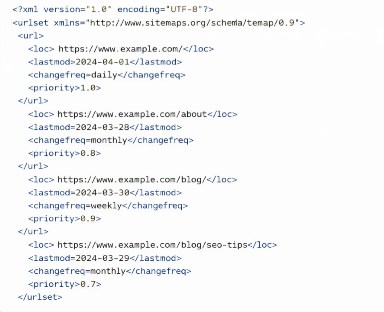
In practical terms, sitemap. XML lets search engines know a site's size. It indicates which pages exist, which are meant for indexing, and which are updated over time. This is especially significant for sites with complex navigation, deeper page structures, or content that changes frequently.
What sitemap does not do things and Prospects. What XML Sitemaps don't do is ensure rankings or override quality signals. It doesn’t make inferior content superior, and it doesn't bind a search engine to index all of your listed pages. It plays a supporting, rather than an independent, role. sitemap. XML improves clarity, not authority. Used properly, it ensures that the best pages are seen by search engines and ranked on their merits.
Why Search Engines Need Structured Guidance
Websites today are rarely static. CMS’s create pages on the fly; filters produce different URL variants; user-generated content grows. Despite advances in search engine technology, automated search still has limitations.
Limitations of Crawling Alone
Crawling: This relies heavily on internal linking. Badly linked, deeply buried, or conditionally navigable pages will make it difficult for search engines to find. Crawlers also favour logical paths, so they will first focus on what seems most connected rather than what is of most value.
Large websites face additional challenges. Keep in mind that crawlers need to decide where to allocate resources, so, left unsupervised, they will prioritise less important pages while missing important content.
When Pages Exist but Are Never Seen
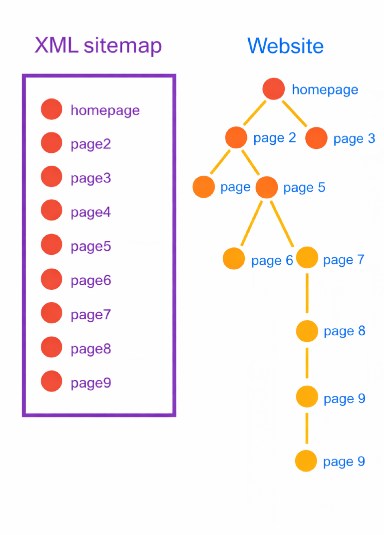
Some pages technically exist, yet they are overlooked in practice. Deep URLs may contain several layers of folders beneath the homepage. Orphan pages can have no backlinks. There are no gradual crawl patterns of constantly changing, dynamically generated content. In these situations, sitemap. XML is a kind of visibility safety net to make sure key URLs don’t get lost in the shuffle.

How sitemap.xml Works in Practice
In operation, sitemap. XML serves as a reference, though. Search engines use the file to determine which URLs will be included in their index. Every URL in the listing includes context, helping search engines understand what lies behind the crawling evidence.
Additional metadata can assist understanding by indicating how frequently the content changes or when it was last updated. Even though these signals are suggestive rather than imperative, they help search engines focus their time and energy more effectively. Higher change frequency will recrawl updated pages more quickly, and lower change frequency will mean fewer revisits to stable pages.
There’s no mechanical or assured interaction. Search engines use a sitemap. XML is part of a broader decision-making process. When the spiders' map lines up with your insides, and you're awesome again, extra places can only help. But when other signals violate it, its potency declines. Efficacy is sensitive to accuracy and alignment rather than complexity.
Different Sitemap Formats and Their Purposes
Sitemap.xml is not always a single file. Different formats exist to support various content types and website needs.
Standard XML Sitemaps for Web Pages
The typical format is a list of generic Web pages. These sitemaps help search engines to discover URLs on your site. They are also very helpful for large or highly organised sites, for which you would not be able to search effectively by hand.
Image and Video Sitemaps
Sites that are more heavily oriented towards images may also benefit from using a specialised image sitemap format. Image and video sitemaps provide more context, enabling search engines to interpret media assets that would otherwise go unnoticed. This is particularly useful for portfolios, online stores, and media-heavy experiences.
News and Time-Sensitive Sitemap Variations
Advanced sitemap types also assist search engines in assigning a degree of priority, according to freshness, for example, which is crucial for websites with frequent updates or time-sensitive material. They enable quicker detection and validation when time is essential to visibility.
The Relationship Between sitemap.xml and Website Architecture
Sitemap.xml performs best when it mirrors the site's logical structure. It should reflect intentional organisation rather than compensate for disorder. When architecture is clear, the sitemap reinforces understanding rather than creating contradictions.
Supporting Intentional Content Hierarchy
A site map with an easy-to-use structure allows visitors to see which bulleted content they have accessed. It's a way to see how pages are connected and who's behind them in the broader navigation web. This also helps with interpretation and disambiguation for search engines.
Why sitemap.xml cannot Fix Structural SEO Problems
One common misconception in technical SEO is that the sitemap. XML can certainly cover a multitude of weakly organised and poorly laid out websites. A sitemap may tell search engines which URLs are available, but without more information, it can’t explain what those pages are for or how they relate to one another. It’s not that easy to get around; information is all over the place, and you keep finding yourself at a dead end because you don't know which direction to take. And a sitemap really isn’t going to help solve this problem. Search engines also heavily rely on internal linking and a site's logical structure to understand importance, relationships between content, and topic relevance. When this foundation is not in place, or is only partially built, presenting pages in a sitemap provides visibility without insight.
Poor internal linking also deprives the site map of its full potential. Internal links lead users and search engines, through purposeful paths, showing which pages support others and which pages are proper hinges or main topics. A site map does not replace these signals; it can only confirm that a page exists. When a sitemap shows many disconnected or duplicate URLs, it's because the site architecture isn't right. In those situations, the sitemap is an evidence file more than a remedy. To ensure technical SEO sustainability, structural problems need to be addressed upstream, through clear navigation and logical content structuring, or meaningful internal linking, before creating a sitemap. XML can effectively reinforce discoverability.
Crawl Budget and Indexation Efficiency
Search engine spiders have a limited amount of bandwidth, and if they are not upgraded often, there's a limit to how much they can crawl. This allocation of resources (also known as the "crawl budget") determines how many pages we'll visit and how often. For large sites, that's not going to fly. When it comes to larger or more dynamic sites, efficiency is what counts.
sitemap. XML that helps draw attention to the most important pages. It enables smarter use of resources by allowing valuable URLs while rejecting low-value ones. This becomes more crucial when content updates frequently and many new pages are added.
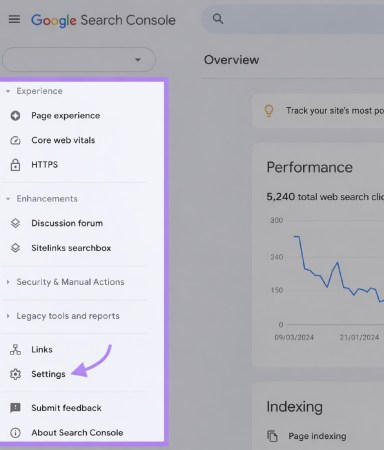
Speed is not the only consideration in indexing practices. It is about prioritisation. sitemap. XML now helps expedite this process and makes it clear which pages of your site need search engines' attention, reducing wasted crawl effort and driving progress by leaps and bounds.
Sitemap.xml in Competitive SEO Markets Like the Netherlands
In competitive SEO markets, sitemap.xml plays a critical role in ensuring efficient content discovery and indexing. It helps search engines prioritise important pages, reduce crawl inefficiencies, and maintain visibility as websites scale, supporting consistent performance in environments with high content competition and frequent updates.
High Competition Increases the Importance of Technical Clarity
Dutch digital is highly developed, especially in cities such as Amsterdam, where access to online businesses is already well established - the money talks. In this kind of environment, technical correctness is expected by search engines as standard, not a competition-killer. If a website doesn't have strong technical signals, it can offer the world and still not matter. Search engines can crawl pages effectively and with confidence when the technical clarity is high, which becomes increasingly important when you're competing against many cleanly optimised sites.
Content-Rich Websites Demand Efficient Indexation
Content creation in competitive markets. Businesses in competitive markets frequently publish large volumes of content to drive marketing, sales, and user education. Valuable pages are likely to be discovered more slowly and less frequently if they’re not indexed properly. sitemap. XML can help bots identify top-tier pages, so the necessary attention is given sooner rather than later - thereby preventing low-priority pages from stealing crawl focus. This is a particularly important efficiency as the number of content libraries grows.
Strong SEO Standards Raise Expectations
In developed digital ecosystems, search engines have needed to apply more stringent assessment standards. Websites are expected to have structural coherence and technical robustness; they should also be coherent in intent. The absence of a solid technical foundation means that even great content may not deliver. sitemap. XML helps us achieve these expectations by creating clarity and order on complex websites.
sitemap.xml Supports Precision Over Volume
Do not tell search engines to crawl everything but the sitemap. XML makes it clear what's important. By focusing on high-quality, indexable pages, it minimises inefficient crawl effort and enhances relevance signals. It's this kind of precision that scales much better in competitive games, where quality and performance trump girth.
Local Competition Rewards Consistency and Structure
Lacklustre competition from the crowd benefits sites that, time and again, provide all three: solid structure, signals clearly telegraphed ahead of a trade, and long-term technical discipline. sitemap. XML enforces this consistency by encoding a content hierarchy "by design" and minimising vagueness. When layered with a solid architectural foundation, it strengthens trust signals and helps websites stay competitive in challenging digital environments.
Deciding What Belongs in a Sitemap
sitemap.xml is a quality filter, not a content dump. Decisions about inclusion shape its effectiveness.
Including Pages That Add Value
A sitemap is most useful when it expresses intent rather than being exhaustively detailed. Only the pages to be indexed and found need to be added here. The pages should also have appropriate use (i.e., they should fill an information or functional need for real users). When a sitemap signals to search engines which pages are both high-value (such as core services, key content sections, or important utility resources) and interconnected, search engines begin to discern where on the website things actually matter. This is a disciplined way to promote clarity and the discoverability of information, while optimising how/where search engines allocate their crawling & indexing resources.
Excluding Pages That Create Noise
Not every URL deserves visibility. “Low-value pages cause confusion and detract from the feasibility of sitemap ping.” xml. Multiple copies of the same page, redirected links, filtered versions of the URL, and temporary or automated pages unnecessarily complicate how you are found. Adding such URLs is a waste of crawl budget and weakens prioritisation by diluting attention to pages with low or no added value. By deliberately omitting these pages, you are left with a clean sitemap that allows search engines to focus on the pages that really matter to users and long-term SEO success.
Keeping sitemap.xml Accurate Over Time
Sitemap. XML cannot be a static file that you just create once and then leave at that. Websites change all the time, adding new pages and posts (which may eliminate some old content) or changing the site's structure. If a sitemap fails to reflect these changes, it will no longer provide an accurate view of the site. Greg, now search engines may be crawling outdated URLs or ignoring the ones you uploaded recently, and they can also get confused about which parts of your website are current and updated. This discrepancy will erode trust in your sitemap as a reliable mentor over time.
Regular maintenance ensures that the sitemap. XML remains synchronised with the site as it is today. When the sitemap accurately reflects updates, deletions, and structural alterations, search engines can rely on it as a reliable guide. This predictability aids efficient crawling, faster detection of new and changed content, and better prioritisation. Ongoing maintenance shifts the sitemap. xml from a proprietary technical tool into a strategic asset for sustainable performance, not just a one-off value play.
Common sitemap.xml Mistakes That Reduce SEO Effectiveness
Improper sitemap.xml implementation can limit SEO performance. Common issues include outdated or broken URLs, missing priority pages, oversized files, incorrect formatting, and a lack of updates. These errors reduce crawl efficiency, confuse search engines, and weaken visibility, making regular auditing and optimisation essential for consistent indexing and performance.
Leaving outdated URLs still listed
Pages removed or replaced still appear in the sitemap. XML crawlers are directed to resources that only disguise the fact that these URLs no longer reflect the current website. This confuses, slows the discovery of meaningful pages, and lowers trust in the sitemap as an authentic reference.
Including pages blocked from indexation
It would be mixed signalling when you list URLs that are intended to be excluded. Search engines are given conflicting directions, reducing clarity and leading to inefficient assessment. A sitemap must never contain anything other than pages to index.
Assuming sitemap. XML alone improves the rankings
Sitemap. XML supports discoverability, not authority. Over-utilising it as a ranking signal creates unrealistic expectations and undervalues important SEO factors such as content quality, site structure, and UX.
Listing every possible URL variation
With filtered views or parameters, and also with multiple versions, it is creating noise. This thins out the crawl resources and increases the difficulty for search engines to determine which pages are truly important.
Mismatch in site structure and sitemap
A non-true navigation and content hierarchy in a site map is an inconsistency. The problem is that search engines can only rank content based on the sitemap, not on the structure.
These problems hinder the clarity and efficiency of crawling; in addition, they prevent the sitemap from being seen as a reliable guide for search engines.
How sitemap.xml Fits Into a Broader SEO Strategy
XML does not replace core SEO elements. It supports them.
Supporting Internal Linking and Content Discovery
Sitemap. XML is a complementary layer to internal linking, rather than a replacement. Internal links provide context, hierarchy, and relevance by showing how pages are related to one another. sitemap. XML enhances this system by helping search engines find all your important pages, especially new ones and those deep within a directory. This 2-pronged strategy reduces the risk of important content being missed & assists various types of discovery across complex site architectures.

Enhancing Technical SEO Without Replacing It
Sitemap. XML helps with technical SEO by making crawling more efficient and clearer, but it does not solve the underlying technical problem. Search engines still need to crawl your site, create a good architecture, and understand the content. Fast-loading pages, mobile usability, and index management all challenge quality. When this base is weak, the sitemap. XML can only reveal shortcomings, not fix them. It also relies on a technically strong environment where both accessibility and performance are already in place.
Aligning Sitemap Management With Content Strategy
A good sitemap is like a content strategy. Whenever new pages are created, existing content is updated, or outdated material is decommissioned, the sitemap is updated. XML should show these changes quickly. This aligns to enable search engines to identify new or updated content more quickly, support near-real-time analysis, and maintain perpetual visibility over time. After a while, synchronising when to update your sitemap with your content planning makes the sitemap. XML as a strategic asset for long-term growth, rather than just a static technical file.
When sitemap.xml has the Greatest Impact
Sitemap. XML becomes particularly useful when discovery and prioritisation are not automatically achieved through crawling. For new sites, it provides early visibility signals that let search engines know about new pages and the size/scope of a site before powerful internal link patterns are developed. This speeds up initial assessment and helps prevent "pages that matter" from going unnoticed while they're small.
On mega-platforms and e-commerce sites, scale adds complexity. With thousands of URLs, constant product shuffling, and changing content, search engines have a hard time figuring out what’s worth paying attention to right now. sitemap. XML provides line-by-line guidance to prioritise what is valuable on your site while helping you ensure it doesn't waste crawl time. Graph To a similar extent, content-based sites (which publish regularly) also benefit, as new sitemaps can signal fresh/relevant content without relying on artificial signals. In all these cases, sitemap. XML validation is more thorough and strengthens document discovery, but it does not support manipulation.
FAQs - sitemap.xml and SEO
It helps search engines discover pages, understand website structure, and crawl important content more efficiently, improving indexing.
Conclusion - sitemap.xml as a Technical Foundation for SEO
Sitemap. XML was only a few changes away from becoming the next killer support layer for technical SEO; it made search engines discover, prioritise, and interpret content far better. It imposes organisation on chaotic collections of webpages, prevents people from getting lost, and surfaces the right information when and where they need it. It doesn’t directly impact your ranking positions. Still, together with what you see in the next two points, it makes the SERPs clearer, and the combination of strong content and clear architecture works better consistently. When sitemap. XML represents the structure of a website so precisely that crawl effectiveness is improved, and reliable indexing can be attained over time.
An experienced Search Engine Optimisation Team understands that effective SEO begins with a strong technical foundation. Well-structured websites with logical layouts, seamless navigation, and solid performance allow sitemap.xml to function efficiently, rather than compensating for structural gaps. In this context, sitemap.xml enhances discoverability and ensures consistent visibility, supporting long-term scalability as websites grow and evolve.
Building SEO - Ready Websites From the Ground Up
Businesses investing in SEO services benefit most when technical SEO elements, such as sitemap.xml, are integrated into the website structure from the beginning. Working with an experienced digital agency ensures that search engines can efficiently access, interpret, and evaluate a website as it grows.
Search
Categories
Recent Posts
-

20 Dec, 2024 Building Brand Loyalty: How Custom Mobile Apps Drive Business Success
-

17 Jan, 2025 Designing An Attractive and Truly User-Friendly Website!
-

23 Dec, 2024 Driving Sales Through Online Channels: Transforming Your Business with a Webshop
-

09 Sep, 2024 Enhancing Customer Engagement: The Business Benefits of Mobile App Development
-

23 Dec, 2024 Expanding Market Reach: The Strategic Value of an E-commerce Webshop
-

10 Mar, 2026 Google Review Card: NFC vs QR – What Works Better?
-

09 Sep, 2024 Harnessing Professional Web Design: Elevating Your Business’s Online Presence
-

09 Sep, 2024 How an Online Delivery System Empowers Business Operations
-

20 Jan, 2025 How To Build A Custom Website For Your Business?
-

20 Jan, 2025 How To Create A Professional Website For Building Online Presence?
-

02 Aug, 2024 How to Plan a Perfect Digital Market
-

23 Dec, 2024 Investing in Website Development: Enhancing Customer Engagement and Conversion Rates
-

23 Dec, 2024 Meeting Customer Expectations: The Competitive Edge of an Online Delivery System
-

23 Dec, 2024 Optimizing Logistics: Enhancing Business Agility with an Online Delivery System
-

17 Jan, 2025 Optimizing Your Website with a Website Builder in Amsterdam
-

27 Dec, 2025 The Cost of Getting a Website Made: What You Can Expect in the Netherlands?
-

09 Sep, 2024 The Essential Role of Online Marketing for Businesses
-

20 Dec, 2024 The Power of Digital Storytelling: Leveraging Online Marketing to Connect with Customers
-

23 Dec, 2024 The Strategic Advantage of a Well-Designed Website for Business Growth
-

23 Dec, 2024 Unlocking Market Potential: How Strategic Digital Marketing Propels Business Success
-

09 Sep, 2024 Unlocking Revenue Streams: Establishing an Online Webshop for Your Business

27 Mar, 2026 What is sitemap.xml and Why Is It Important for SEO?
-

15 Jan, 2026 What Makes a Website Design User-Friendly?
-

21 Mar, 2026 What’s Involved in Having a Website Created: A Step – by – Step Guide
-

27 Feb, 2026 What’s Involved in Having a Website Created: A Step-by-Step Guide
-

21 Jan, 2025 Why Consider WordPress for Website Builder?
-

21 Jan, 2025 Why Do Businesses Hire WordPress Website Builder Companies?
-

20 Jan, 2025 Why Does Your Business Need a Local Web Design Agency?
-

11 Dec, 2025 Why You Should Have a Professional Website Built in 2026: What’s Changing?